The fourth century stands as one of the most decisive periods in the history of Christianity. In the space of one hundred years, the church moved from being a persecuted minority within the Roman Empire to becoming a legally recognized and eventually imperially supported institution. This transformation reshaped Christian theology, ecclesial structures, worship, and the … Read More “The Fourth Century: A Turning Point in Christian Church History” »
Episodes and Posts
Formal theological education is so embedded in contemporary Christianity that it is easy to assume degrees such as the Master of Divinity or Doctor of Theology have always existed. In reality, theological degrees developed gradually, shaped by medieval universities, ecclesiastical needs, denominational priorities, and—more recently—modern academic and professional expectations. This post traces the historical development … Read More “A Brief History of Theological Degrees in Christianity” »
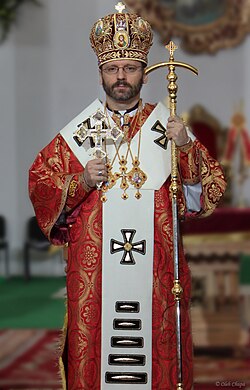
Many people are surprised to learn that the Catholic Church is not monolithic. While the Roman Catholic Church is by far the largest and most visible expression of Catholicism, it exists alongside Eastern Catholic Churches that are fully Catholic yet distinctly Eastern in theology, worship, and practice. This post explains what separates Roman Catholic and Eastern Catholic traditions, why that separation … Read More “Roman Catholic and Eastern Catholic: What’s the Difference?” »
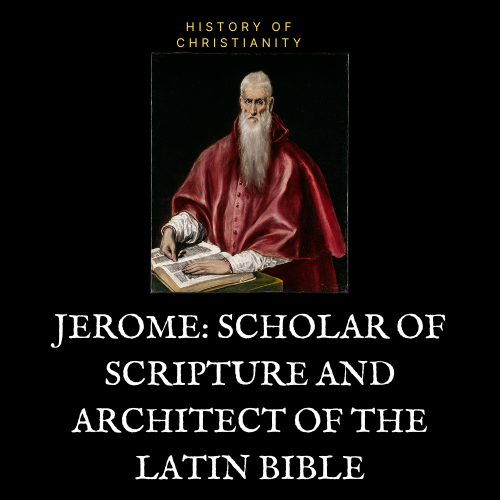
This post is a companion piece to my podcast episode on Jerome. It is not the transcript for the episode. The podcast episode on Jerome introduces him as the architect of the Latin Vulgate and one of the most formidable biblical scholars of late antiquity. This companion post expands that portrait by exploring Jerome’s personality, lesser-known … Read More “Jerome: The Man Behind the Vulgate and the Making of the Latin Bible” »
One of the Christian leaders of the fourth century who had the greatest impact on the later church. While active in many areas, his Latin translation of the Bible had legacy as much as if not more than the writing of any other contemporary thinker. In this episode, we look at the life and ministry … Read More “Episode 71 – Jerome: Scholar of Scripture and Architect of the Latin Bible” »
Development, Doctrine, and Devotion The veneration of saints is one of the most distinctive features of Roman Catholic Christianity. To critics, it has often appeared as an innovation or even a deviation from early Christian practice. To Catholics, it represents a natural outgrowth of core Christian convictions about the resurrection, the communion of believers, and … Read More “The Role of the Saints in Roman Catholic Theology” »
Introduction Postmillennialism is one of the three major Christian millennial frameworks, alongside premillennialism and amillennialism. Though often overshadowed in popular evangelical discourse by premillennialism, postmillennialism has played a significant role in shaping Protestant theology, Western political thought, and Christian engagement with culture. In recent decades, it has experienced a modest revival, often intersecting with debates … Read More “The Rise and Development of Postmillennialism” »
The idea that Christmas has always been a universally beloved Christian holiday is a modern assumption. In seventeenth-century England and colonial New England, Christmas became the focus of intense religious and cultural conflict. For the Puritans, Christmas was not merely an innocent celebration but a symbol of theological error, moral excess, and unwanted continuity with … Read More “The Puritan War on Christmas” »
The Salvation Army emerged in the late nineteenth century as an innovative evangelical movement that fused revivalist theology with a disciplined, quasi-military structure aimed at urban mission. Its beginnings, leadership, theological commitments, and organizational instincts positioned it uniquely within the broader landscape of Protestantism. Historical and cultural context The Salvation Army was born in 1865 … Read More “The Mustering of the Salvation Army” »
The Seven Sisters of Mainline Protestantism: Origins, Development, and Their Changing Place in American Christianity
For more than a century, the phrase “mainline Protestantism” has referred to a specific group of American Protestant denominations that held significant cultural, theological, and institutional influence. At the heart of this tradition stand the “Seven Sisters of Mainline Churches,” a term used by historians and sociologists to describe the seven most prominent, historically rooted, socially engaged, and ecumenically … Read More “The Seven Sisters of Mainline Protestantism: Origins, Development, and Their Changing Place in American Christianity” »