The Religious Society of Friends, commonly known as the Quakers, is one of the most distinctive movements to emerge from seventeenth-century Christianity.
Quakers rejected many of the assumptions of established Christianity in their day. They had no ordained priesthood in the traditional sense, emphasized direct experience of God, gathered for worship in silence, rejected social distinctions between people, and developed a powerful commitment to peace, simplicity, integrity, and social justice.
They were persecuted when the movement began, became an important religious community in the American colonies, and eventually became famous for their work in abolitionism, prison reform, humanitarian relief, peace activism, and other causes.
Today, Quakerism is a worldwide movement, but it is also a remarkably diverse one. Some Friends remain strongly evangelical and explicitly Christian. Others belong to liberal meetings that include people who understand Quakerism in more universalist, humanist, or even non-theist terms.
Understanding that diversity is essential to understanding the Quakers.
The Religious Background of Seventeenth-Century England
Quakerism emerged during one of the most turbulent periods in English history.
The seventeenth century witnessed the English Civil Wars, the execution of Charles I, the Commonwealth and Protectorate under Oliver Cromwell, the restoration of the monarchy, and intense religious conflict.
England was officially Anglican, but the country contained a bewildering variety of religious movements.
Puritans, Baptists, Congregationalists, Independents, Seekers, and other groups challenged the established Church of England.
Many people were dissatisfied with what they regarded as an increasingly formal and institutional Christianity.
The question was not simply which denomination had the correct theology.
Many people were asking a more fundamental question:
How can an individual actually encounter God?
It was in this environment of religious experimentation that George Fox began his spiritual search.
George Fox
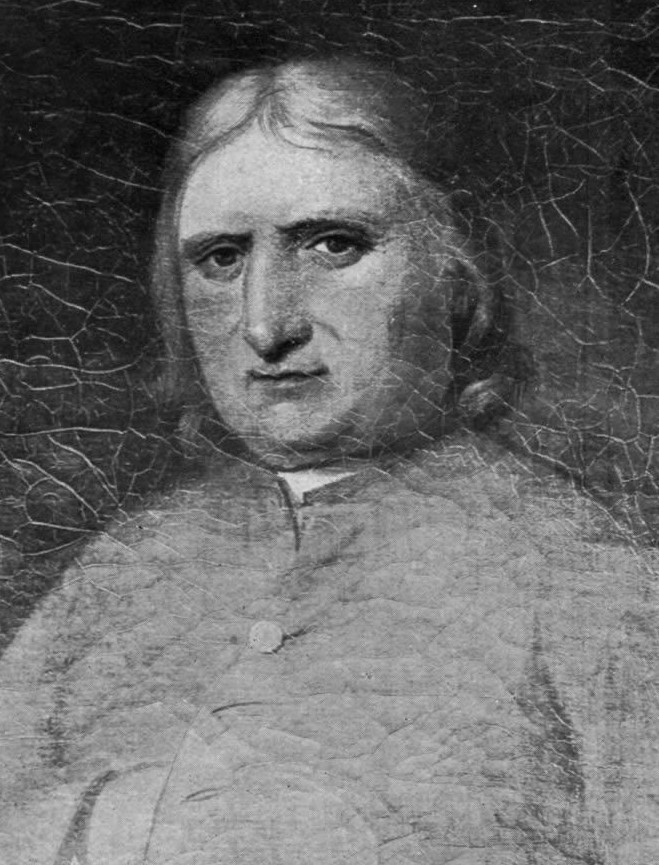
The person most closely associated with the beginning of Quakerism was George Fox, born in Leicestershire in 1624.
It would be more accurate to call Fox the founder and principal early leader of Quakerism than to suggest that he created the movement entirely by himself. Quakerism emerged from a broader network of religious seekers, and people such as Margaret Fell played crucial roles in organizing and developing the movement.
Fox himself spent years searching for spiritual answers.
He visited various religious leaders but remained dissatisfied.
According to his later account, he eventually experienced a profound spiritual realization: Christ himself could speak directly to his condition.
This became central to his understanding of Christianity.
Fox concluded that people did not need a priest to stand between them and God.
The living Christ could speak directly to the individual.
The movement that developed around this conviction became known as the Religious Society of Friends.
The “Inner Light”
One of the most famous Quaker concepts is the Inner Light.
This does not simply mean that Quakers believe that everyone is inherently good.
Traditionally, Friends have understood the Inner Light as God’s presence or activity within human beings, particularly associated with the living Christ and the Holy Spirit.
Because God can speak directly to individuals, no human being possesses an exclusive monopoly on access to God.
This had enormous consequences.
It meant that ordinary men and women could receive spiritual insight.
It meant that a formal priesthood was unnecessary.
It meant that women could preach.
It meant that social rank did not determine spiritual authority.
And it meant that the Christian life was fundamentally experiential rather than merely intellectual.
Modern Quaker organizations describe direct experience of the divine and continuing revelation as fundamental aspects of Quaker faith, although Friends differ considerably in how they understand the nature of that divine reality.
The Beginning of the Quaker Movement
Fox traveled extensively throughout England preaching his message.
One especially important event occurred in 1652, when Fox climbed Pendle Hill in Lancashire.
He later described receiving a vision of a great number of people who would become part of a religious movement.
He then traveled throughout the region preaching.
At one point, he preached for several hours to a gathering near Sedbergh.
These events have traditionally been regarded as important moments in the emergence of organized Quakerism.
The early followers did not initially call themselves “Quakers.”
They used terms such as Friends of Truth, Friends, and Children of Light.
The term “Quaker” was originally a nickname used by outsiders.
One traditional explanation is that the term referred to the trembling or “quaking” associated with intense religious experience.
Eventually, the Friends themselves adopted the name.
Margaret Fell
One of the most important early Quakers was Margaret Fell.
She was not simply an assistant to George Fox.
Fell was an important leader and organizer in her own right.
Her home at Swarthmoor Hall became a major center for the emerging movement.
She also played an important role in defending women’s participation in ministry.
Her 1666 pamphlet “Women’s Speaking Justified” argued that women were equally capable of receiving divine revelation and proclaiming God’s message.
Fell eventually married George Fox in 1669.
The partnership between Fox and Fell was crucial to the development of the Society of Friends.
Her importance is also a reminder that women were not simply passive members of early Quakerism.
Women were among its preachers, organizers, writers, and leaders.
Why Were the Quakers Persecuted?
The early Quakers challenged both religious and political conventions.
They refused to recognize the authority of priests.
They did not normally participate in conventional Anglican worship.
They refused to pay some compulsory religious taxes.
They refused to swear oaths.
They rejected many social customs that implied differences in status.
For example, Quakers often refused to remove their hats before social superiors.
This was not merely eccentric behavior.
It expressed their conviction that all people stand on equal ground before God.
The result was persecution.
Fox was imprisoned repeatedly, and thousands of early Friends experienced imprisonment, fines, physical violence, or other forms of persecution.
The movement nevertheless continued to grow.
Quaker Worship
Perhaps the most recognizable feature of Quakerism is its traditional form of worship.
A traditional unprogrammed Meeting for Worship has no sermon, ordained minister, or predetermined liturgy.
Friends gather together in silence.
They wait upon God.
If someone feels genuinely led to speak, they may stand and offer ministry.
Another person may speak later.
There may be long periods of complete silence.
The goal is not simply quiet meditation.
The purpose is to become receptive to the movement of the Spirit.
This form of worship developed from the early Quaker conviction that God could speak directly to any person.
Not every Quaker worship service looks like this today.
Many Friends, particularly in Africa, Latin America, and parts of the United States, worship in programmed or pastoral meetings that may include hymns, Scripture readings, sermons, and pastors.
This distinction is one of the major differences within contemporary Quakerism.
Quaker Decision-Making
The Quaker approach to decision-making is also distinctive.
Traditional Friends do not normally make decisions through simple majority voting.
Instead, they seek what is often called the sense of the meeting.
Friends discuss an issue while attempting to discern where the meeting is being led.
The objective is not to determine which faction has the most votes.
It is to discover whether the meeting can reach a genuine sense of unity.
This approach reflects the belief that God’s guidance can be discerned collectively.
It can make Quaker decision-making slow.
But that is partly the point.
The process requires people to listen carefully to one another rather than simply attempting to defeat an opposing position.
Quaker Beliefs
Quakerism is difficult to summarize with a conventional creed.
Historically, Friends have generally emphasized experience and practice over formal doctrinal statements.
Nevertheless, several themes have been particularly important.
Direct Access to God
Every person can encounter God directly.
No priest is required as an intermediary.
Continuing Revelation
God has not stopped communicating with humanity.
The Bible records revelation, but Friends believe God can continue to guide people today.
This does not mean that every thought or impulse is automatically regarded as divine.
Friends traditionally test individual leadings through Scripture, community discernment, experience, and the wider wisdom of the meeting.
The Inner Light
There is “that of God” in every person.
This provides a theological foundation for the Quaker emphasis on human equality.
Simplicity
Friends have historically sought to avoid unnecessary displays of wealth and status.
This produced practices such as plain dress and “plain speech.”
Integrity
Quakers have traditionally emphasized absolute honesty.
Their refusal to swear oaths arose partly from the conviction that Christians should tell the truth all the time, rather than merely when placed under oath.
Equality
Social distinctions should not determine a person’s spiritual worth.
This helped lead Friends to unusually strong support for the ministry of women.
Peace
The peace testimony became one of the defining characteristics of Quakerism.
Friends have historically rejected participation in warfare and have often sought alternatives to violence.
These values are commonly expressed through Quaker testimonies concerning peace, integrity, simplicity, community, equality, and stewardship.
Quakers in the American Colonies
Quakerism spread rapidly beyond Britain.
Friends began traveling to the American colonies during the seventeenth century.
They encountered both opportunities and persecution.
One of the most famous Quaker settlements developed in Pennsylvania.
Its connection with Quakerism is inseparable from William Penn.
William Penn
William Penn was born into an influential English family and became a Quaker as a young man.
His religious beliefs repeatedly brought him into conflict with the authorities.
Penn eventually received a large land grant in North America from King Charles II.
The territory became Pennsylvania, named after Penn’s father.
Penn envisioned the colony as a place where religious liberty could flourish.
The famous “Holy Experiment” attempted to create a society based upon religious toleration, representative government, and peaceful relations with Indigenous peoples.
Philadelphia became the center of the colony.
Quakers became particularly influential in Pennsylvania and the surrounding Mid-Atlantic region.
The American colonies therefore became one of the most important centers of Quakerism.
Quakers and Indigenous Peoples
Quaker history includes a significant tradition of seeking peaceful relationships with Indigenous peoples.
William Penn is famous for his treaty-making and diplomatic relationships with Indigenous communities.
However, modern historians have also emphasized that the history of colonialism was considerably more complicated than traditional Quaker accounts sometimes suggested.
Quaker involvement in colonial society did not remove Friends from the broader structures of European colonization.
This is particularly important when considering Quaker claims about equality and justice.
The Society of Friends has had a long tradition of criticizing injustice, but Friends have also had to confront their own failures to live consistently according to their principles.
Quakers and Slavery
The history of Quakers and slavery is similarly complicated.
Some early Quakers owned enslaved people or participated in economies dependent upon slavery.
Over time, however, Friends became increasingly prominent in the abolitionist movement.
The Quaker emphasis on equality before God created a powerful theological basis for opposition to slavery.
By the eighteenth century, prominent Quakers such as John Woolman were challenging slavery within their own communities.
Eventually, many American Quaker organizations prohibited members from owning enslaved people.
Quakers became important participants in the broader abolitionist movement.
John Woolman
John Woolman was one of the most influential eighteenth-century Quakers.
Born in New Jersey in 1720, Woolman became deeply troubled by slavery and other forms of exploitation.
Rather than simply campaigning against slavery politically, he challenged Friends to examine their own economic behavior.
His Journal became one of the classic texts of Quaker spirituality.
Woolman’s approach illustrates an important characteristic of Quaker social activism:
Social reform begins with personal transformation.
The question was not simply, “What laws should society pass?”
It was also:
“How am I participating in the injustice I claim to oppose?”
This remains an important element of Quaker social ethics.
Quakers and the Underground Railroad
During the nineteenth century, some American Quakers participated in the Underground Railroad, helping enslaved people escape to freedom.
Not every Quaker supported every abolitionist tactic, and Friends were not a unified political movement.
Nevertheless, Quaker communities were disproportionately represented among religious groups involved in abolitionist activity.
Their meetings provided networks, moral support, and organizational resources for the antislavery movement.
Quaker Women’s Rights
Quaker ideas about equality also contributed to the development of the women’s rights movement.
One important figure was Lucretia Mott.
Mott was a Quaker minister and abolitionist who became one of the leading advocates for women’s rights in nineteenth-century America.
She participated in the Seneca Falls Convention of 1848, one of the foundational events in the American women’s rights movement.
Her Quaker background helped shape her conviction that women possessed the same spiritual and moral capacities as men.
Quaker meetings had already provided women opportunities to preach and exercise religious leadership at a time when many other Christian communities restricted such roles.
Elizabeth Fry
Another important Quaker reformer was Elizabeth Fry.
Born in England in 1780, Fry became famous for her work on prison reform.
She was particularly concerned about the terrible conditions faced by women prisoners.
Fry advocated better treatment, education, employment, and rehabilitation.
Her work helped transform public attitudes toward prisons.
She became one of the most recognizable social reformers of nineteenth-century Britain.
Her career illustrates the broader Quaker tradition of combining spiritual conviction with practical social reform.
Quakers and Peace
The peace testimony became increasingly important as Quakerism developed.
Friends generally rejected military service and attempted to find nonviolent alternatives to armed conflict.
This did not mean Quakers were passive in the face of injustice.
Rather, they developed a tradition of nonviolent activism.
During wars, Quakers became involved in:
- Humanitarian relief
- Medical assistance
- Refugee work
- Conscientious objection
- Prisoner assistance
- Reconciliation
- Peace negotiations
This tradition became particularly important during the twentieth century.
Quakers During the World Wars
Quakers faced difficult questions during both World Wars.
Some Friends were conscientious objectors and refused military service.
Others participated in alternative forms of national service.
Quaker relief organizations provided humanitarian assistance to civilians and prisoners of war.
The work of the American Friends Service Committee, founded in 1917, became particularly important.
The organization received the Nobel Peace Prize in 1947, jointly with the British Friends Service Council, for Quaker humanitarian and peace work.
This represented international recognition of a tradition that had begun with the early Quaker rejection of violence.
Quakers and the Civil Rights Movement
Quaker involvement in racial justice continued into the twentieth century.
Friends participated in campaigns against segregation and racial discrimination.
Some Quakers worked alongside African American civil rights leaders.
One particularly interesting figure was Bayard Rustin, a Quaker and pacifist who became one of the principal organizers of the 1963 March on Washington.
Rustin was also involved in the broader civil rights and peace movements.
His career illustrates how Quaker principles of nonviolence could intersect with larger movements for social transformation.
Quakers and Humanitarian Work
Quaker organizations have developed an international reputation for humanitarian work.
The American Friends Service Committee and British Quaker organizations have worked in refugee relief, peacebuilding, development, human rights, and conflict resolution.
The Quaker United Nations Office has also represented Quaker concerns at the United Nations.
The Friends World Committee for Consultation, founded in 1937, provides a mechanism for communication among the different branches of the worldwide Quaker movement.
Where Were Quakers Most Popular?
Historically, Quakerism was strongest in several areas.
England
England was the birthplace of the movement and remains home to a significant Quaker community.
Pennsylvania and the Mid-Atlantic
Pennsylvania became the most famous American center of Quakerism.
Quaker communities also developed in New Jersey, Delaware, Maryland, and other parts of the United States.
New England
Quakers spread into New England but faced severe persecution.
Massachusetts executed several Quakers during the 1660s, demonstrating just how threatening the movement appeared to established authorities.
The American Midwest
Quakerism later spread westward through migration and new settlements.
Indiana and Ohio became particularly important centers of American Quakerism.
Britain and Ireland
The movement maintained a substantial presence in Britain and Ireland even as Quakerism declined relative to the larger Christian denominations.
Africa
Perhaps the biggest change in the geography of Quakerism occurred in the nineteenth and twentieth centuries.
Quaker missionaries and African converts established substantial communities in countries including Kenya, Burundi, Rwanda, Tanzania, and Uganda.
Today, Africa has the largest number of Quakers in the world. The Friends World Committee’s Africa Section is the largest of its four sections, with nearly 160,000 Friends in its current membership information.
This is an important corrective to the popular image of Quakers as primarily an English or American religious movement.
Modern Quakerism is increasingly a global movement.
The Great Quaker Schism
Quakerism itself experienced serious divisions.
During the nineteenth century, American Friends became divided over theology, worship, and church organization.
One major division occurred between Hicksite and Orthodox Friends.
The Hicksites, associated with Elias Hicks, emphasized the Inner Light and the experiential dimension of Quakerism.
The Orthodox Friends generally emphasized evangelical Christianity, Scripture, and traditional Christian doctrine more strongly.
Further divisions followed.
Some Quaker groups adopted pastoral ministry and programmed worship.
Others maintained traditional unprogrammed worship.
These divisions help explain why it is difficult to describe “the Quaker position” on many theological questions.
There is no single worldwide Quaker denomination governed by one central authority.
Quakerism Today
Modern Quakerism is extraordinarily diverse.
Some Friends remain explicitly Christian.
They may affirm:
- The divinity of Christ
- The resurrection
- The authority of Scripture
- Evangelism
- Traditional Christian theology
Other Friends belong to liberal meetings in which Christian language is combined with insights from other religious traditions.
Some Friends describe themselves as universalist.
Others are nontheists who participate in Quaker worship because they value its emphasis on silence, community, ethical living, and discernment.
This diversity is sometimes difficult for outsiders to understand.
A Quaker meeting in Kenya may look considerably different from a meeting in Britain.
A programmed evangelical Friends church in the United States may look very different from an unprogrammed liberal meeting in Philadelphia or London.
The Friends World Committee explicitly recognizes this diversity while seeking to maintain fellowship among the different branches of the movement.
Programmed and Unprogrammed Quakers
Contemporary Quakers can broadly be divided into different traditions of worship.
Unprogrammed Friends
These Friends generally worship in silence without a pastor or prepared sermon.
The meeting waits for the Spirit, and participants may speak if they feel led.
This form is particularly associated with Britain, Ireland, parts of the United States, and some other regions.
Programmed Friends
These Friends generally worship in a more conventional Protestant style.
Services may include:
- Hymns
- Scripture readings
- Sermons
- Pastoral leadership
- Prayer
This form is particularly prominent in Africa and among Evangelical Friends.
Semi-Programmed Friends
Some meetings combine the two approaches.
There may be planned worship elements while also incorporating periods of silence and expectant waiting.
This diversity is one of the defining characteristics of contemporary Quakerism.
How Many Quakers Are There Today?
The worldwide Quaker population is relatively small compared with major Christian denominations.
The Friends World Committee for Consultation describes the worldwide Quaker family as numbering more than 400,000 Friends, although membership figures vary depending on how affiliated and unaffiliated groups are counted.
The geographical distribution is striking.
Africa has become the demographic center of global Quakerism.
The Americas remain an important center.
Britain retains historic significance.
There are also Quaker communities throughout Europe, Asia, the Pacific, Latin America, and elsewhere.
The Asia-West Pacific section alone encompasses a remarkable variety of cultures and worship traditions.
Quakerism and Christianity
One of the most interesting questions about Quakerism today is whether Quakerism should be regarded as a Christian denomination.
Historically, the answer is clearly yes.
The founders of the movement understood themselves as Christians.
George Fox preached Christ.
Early Friends read the Bible.
They spoke extensively about Jesus, the Holy Spirit, resurrection, sin, salvation, and the Kingdom of God.
The movement’s earliest goal was not necessarily to create a new religion.
Fox believed Christianity needed to recover the direct experience of the Spirit that he believed characterized the early church.
Modern Quakerism, however, has developed beyond this original theological framework in some places.
Some Friends remain strongly Christian.
Others have adopted universalist, interfaith, or nontheist approaches.
This means that the answer to “What do Quakers believe about Christianity?” depends significantly on which Quaker community one is describing.
Some of the Most Important Quakers
A useful way to understand Quaker history is through its major figures.
George Fox
Founder and principal early leader of the movement. He emphasized the Inner Light, direct access to God, continuing revelation, and spiritually led worship.
Margaret Fell
One of the movement’s most important organizers and advocates for women’s ministry. She later married Fox.
William Penn
Founder of Pennsylvania and an influential advocate of religious toleration.
John Woolman
Eighteenth-century Quaker mystic and abolitionist who challenged slavery and economic injustice.
Elizabeth Fry
British prison reformer who transformed attitudes toward the treatment of prisoners.
Lucretia Mott
Quaker minister, abolitionist, and pioneer of the American women’s rights movement.
Rufus Jones
A twentieth-century American Quaker scholar and theologian who helped revive interest in the mystical dimensions of Quakerism.
Bayard Rustin
Quaker, pacifist, civil rights activist, and principal organizer of the 1963 March on Washington.
These individuals demonstrate the remarkable range of Quaker influence.
The movement has produced preachers, politicians, mystics, abolitionists, reformers, activists, scholars, humanitarian workers, and peacebuilders.
The Quaker Legacy
The influence of the Quakers is much larger than their numbers.
Their most important legacy may be their conviction that religious experience must produce ethical action.
For Friends, faith is not merely a collection of doctrines.
It is something that should shape the way a person lives.
This conviction contributed to Quaker involvement in:
- Abolitionism
- Prison reform
- Women’s rights
- Civil rights
- Humanitarian relief
- Peace activism
- Conscientious objection
- Refugee assistance
- Conflict resolution
- Environmental concerns
- Social justice
The Quaker contribution to these causes was not always unique.
Other Christian groups participated in many of the same movements.
But the Quaker tradition was unusual in the consistency with which it connected spiritual discernment with practical action.
The Quakers’ Greatest Contribution
Perhaps the most important contribution of the Quakers is a particular understanding of what it means to be the church.
They challenged the assumption that Christianity requires elaborate buildings, ordained clergy, formal sacraments, fixed liturgies, or centralized authority.
Instead, they emphasized a gathered community waiting upon God.
That community could meet in a simple room.
It could sit in silence.
Someone might speak.
Another might remain silent.
The meeting would seek God’s direction together.
And then the Friends would attempt to live out what they had discerned.
This produced one of the most distinctive religious traditions in Christianity.
Conclusion
The Quakers began in the religious turmoil of seventeenth-century England.
George Fox was the central founding figure, but the movement emerged from a larger community of religious seekers and depended heavily on leaders such as Margaret Fell.
The early Friends believed that God could speak directly to every person through the Inner Light.
They rejected the idea that priests possessed exclusive spiritual authority and developed a form of worship centered on silence and waiting upon the Spirit.
Their insistence upon equality, simplicity, integrity, and peace frequently brought them into conflict with the political and religious authorities of their time.
Persecution nevertheless failed to stop the movement.
Quakers spread throughout Britain and Ireland and then into the American colonies. Pennsylvania became their most famous settlement through William Penn’s “Holy Experiment.”
Over the following centuries, Friends became prominent in abolitionism, women’s rights, prison reform, civil rights, humanitarian relief, and peace activism.
Yet the history of Quakerism is not simply a story of uninterrupted progress.
Friends experienced major theological divisions, and contemporary Quakerism contains a remarkable range of beliefs and practices.
Some Friends remain strongly evangelical and explicitly Christian.
Others practice a liberal form of Quakerism that incorporates universalist, interfaith, or humanist perspectives.
Some worship in silence without clergy.
Others worship with pastors, sermons, Scripture readings, and hymns.
The demographic center of Quakerism has also shifted.
The movement that began in England now has its largest population in Africa, with substantial communities throughout the Americas and smaller communities across Europe, Asia, and the Pacific.
The Friends World Committee for Consultation now works to maintain connections between these diverse traditions. In 2024, approximately 500 Friends from 53 countries gathered for its World Plenary Meeting in South Africa, a fitting illustration of how far the movement has traveled from its seventeenth-century English origins.
The history of the Quakers is therefore a story of both continuity and change.
The movement has changed enormously since George Fox walked across England preaching about the direct presence of Christ.
But one idea remains central:
God can speak to ordinary people, and authentic faith should be demonstrated by the way those people live.
That conviction helped create one of the most unusual—and influential—movements in the history of Christianity.