Augustine of Canterbury (d. c. 604) stands at the beginning of organized Christianity in Anglo-Saxon England. Sent from Rome as a missionary rather than a theologian in the speculative sense, Augustine’s significance lies not in original doctrinal development but in institution-building, pastoral leadership, and the transmission of Roman Christianity to the English kingdoms. His work laid the … Read More “Augustine of Canterbury: Apostle to the English and Architect of Anglo-Saxon Christianity” »
Month: January 2026
The fourth century stands as one of the most decisive periods in the history of Christianity. In the space of one hundred years, the church moved from being a persecuted minority within the Roman Empire to becoming a legally recognized and eventually imperially supported institution. This transformation reshaped Christian theology, ecclesial structures, worship, and the … Read More “The Fourth Century: A Turning Point in Christian Church History” »
Formal theological education is so embedded in contemporary Christianity that it is easy to assume degrees such as the Master of Divinity or Doctor of Theology have always existed. In reality, theological degrees developed gradually, shaped by medieval universities, ecclesiastical needs, denominational priorities, and—more recently—modern academic and professional expectations. This post traces the historical development … Read More “A Brief History of Theological Degrees in Christianity” »
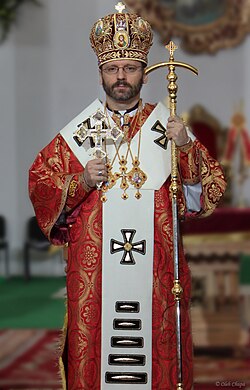
Many people are surprised to learn that the Catholic Church is not monolithic. While the Roman Catholic Church is by far the largest and most visible expression of Catholicism, it exists alongside Eastern Catholic Churches that are fully Catholic yet distinctly Eastern in theology, worship, and practice. This post explains what separates Roman Catholic and Eastern Catholic traditions, why that separation … Read More “Roman Catholic and Eastern Catholic: What’s the Difference?” »
This post is a companion piece to my podcast episode on Jerome. It is not the transcript for the episode. The podcast episode on Jerome introduces him as the architect of the Latin Vulgate and one of the most formidable biblical scholars of late antiquity. This companion post expands that portrait by exploring Jerome’s personality, lesser-known … Read More “Jerome: The Man Behind the Vulgate and the Making of the Latin Bible” »
Development, Doctrine, and Devotion The veneration of saints is one of the most distinctive features of Roman Catholic Christianity. To critics, it has often appeared as an innovation or even a deviation from early Christian practice. To Catholics, it represents a natural outgrowth of core Christian convictions about the resurrection, the communion of believers, and … Read More “The Role of the Saints in Roman Catholic Theology” »