Introduction Postmillennialism is one of the three major Christian millennial frameworks, alongside premillennialism and amillennialism. Though often overshadowed in popular evangelical discourse by premillennialism, postmillennialism has played a significant role in shaping Protestant theology, Western political thought, and Christian engagement with culture. In recent decades, it has experienced a modest revival, often intersecting with debates … Read More “The Rise and Development of Postmillennialism” »
Year: 2025
The idea that Christmas has always been a universally beloved Christian holiday is a modern assumption. In seventeenth-century England and colonial New England, Christmas became the focus of intense religious and cultural conflict. For the Puritans, Christmas was not merely an innocent celebration but a symbol of theological error, moral excess, and unwanted continuity with … Read More “The Puritan War on Christmas” »
The Salvation Army emerged in the late nineteenth century as an innovative evangelical movement that fused revivalist theology with a disciplined, quasi-military structure aimed at urban mission. Its beginnings, leadership, theological commitments, and organizational instincts positioned it uniquely within the broader landscape of Protestantism. Historical and cultural context The Salvation Army was born in 1865 … Read More “The Mustering of the Salvation Army” »
The Seven Sisters of Mainline Protestantism: Origins, Development, and Their Changing Place in American Christianity
For more than a century, the phrase “mainline Protestantism” has referred to a specific group of American Protestant denominations that held significant cultural, theological, and institutional influence. At the heart of this tradition stand the “Seven Sisters of Mainline Churches,” a term used by historians and sociologists to describe the seven most prominent, historically rooted, socially engaged, and ecumenically … Read More “The Seven Sisters of Mainline Protestantism: Origins, Development, and Their Changing Place in American Christianity” »
The Development of the Chicago Statement on Biblical Inerrancy: Origins, Debates, and Lasting Impact
Few modern theological documents have shaped evangelical identity as profoundly as the Chicago Statement on Biblical Inerrancy (1978). Emerging from decades of debate over the nature of Scripture, the Chicago Statement marked a major moment in the late-20th-century effort to define and defend the authority of the Bible. Understanding its development requires appreciating the intellectual, cultural, and … Read More “The Development of the Chicago Statement on Biblical Inerrancy: Origins, Debates, and Lasting Impact” »
The First Vatican Council, better known as Vatican I, represents one of the most significant moments of self-definition in the modern history of the Roman Catholic Church. Meeting from 1869 to 1870, it set doctrinal boundaries that continue to shape Catholic theology, authority, and identity today. Though commonly remembered for defining papal infallibility, the council’s origins, purpose, … Read More “Vatican I: Origins, Decisions, and Lasting Impact” »
The Old Testament Apocrypha—also known as the Deuterocanonical books—occupies a fascinating and sometimes controversial place in the history of the Church. These writings, composed between the close of the Old Testament (around 400 B.C.) and the time of Christ, were highly valued by Jewish and early Christian communities. Yet their canonical status has varied widely across Christian traditions. … Read More “How the Church Has Used the Old Testament Apocrypha” »
The Protestant Reformation was not the work of one man but of many reformers whose ideas reshaped Christianity in Europe. Among them, Martin Luther and John Calvin stand as two of the most influential. Though they never met in person, their theological and historical legacies were deeply intertwined. Luther laid the groundwork for Protestant reform, while Calvin refined and … Read More “Martin Luther and John Calvin: Allies, Rivals, and Architects of the Reformation” »
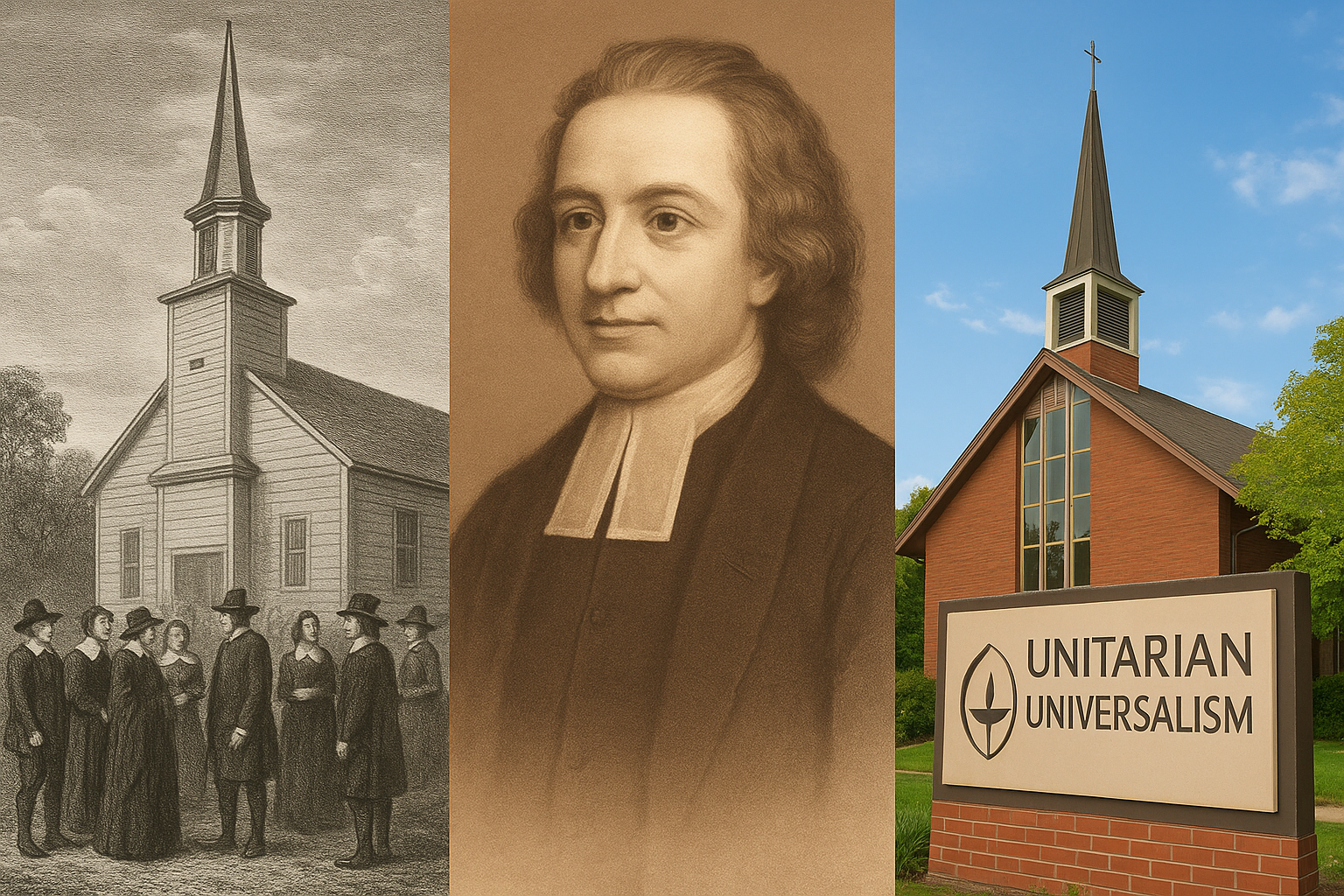
The story of how some Puritans evolved into Unitarians is one of the most fascinating transformations in religious history. What began as a movement seeking to purify the Church of England of Catholic influences eventually gave rise to one of the most liberal and rational forms of Christianity. This journey—from the rigid orthodoxy of Puritanism … Read More “From Puritans to Unitarians: The Evolution of a Radical Faith” »
In the early decades of the 19th century, a region in upstate New York became the most spiritually and socially combustible area in the United States. Known as the “Burned-Over District,” this stretch of land witnessed such intense waves of religious revival that it was said there was no more “fuel” (souls) left to burn. … Read More “The Burned-Over District in New York” »