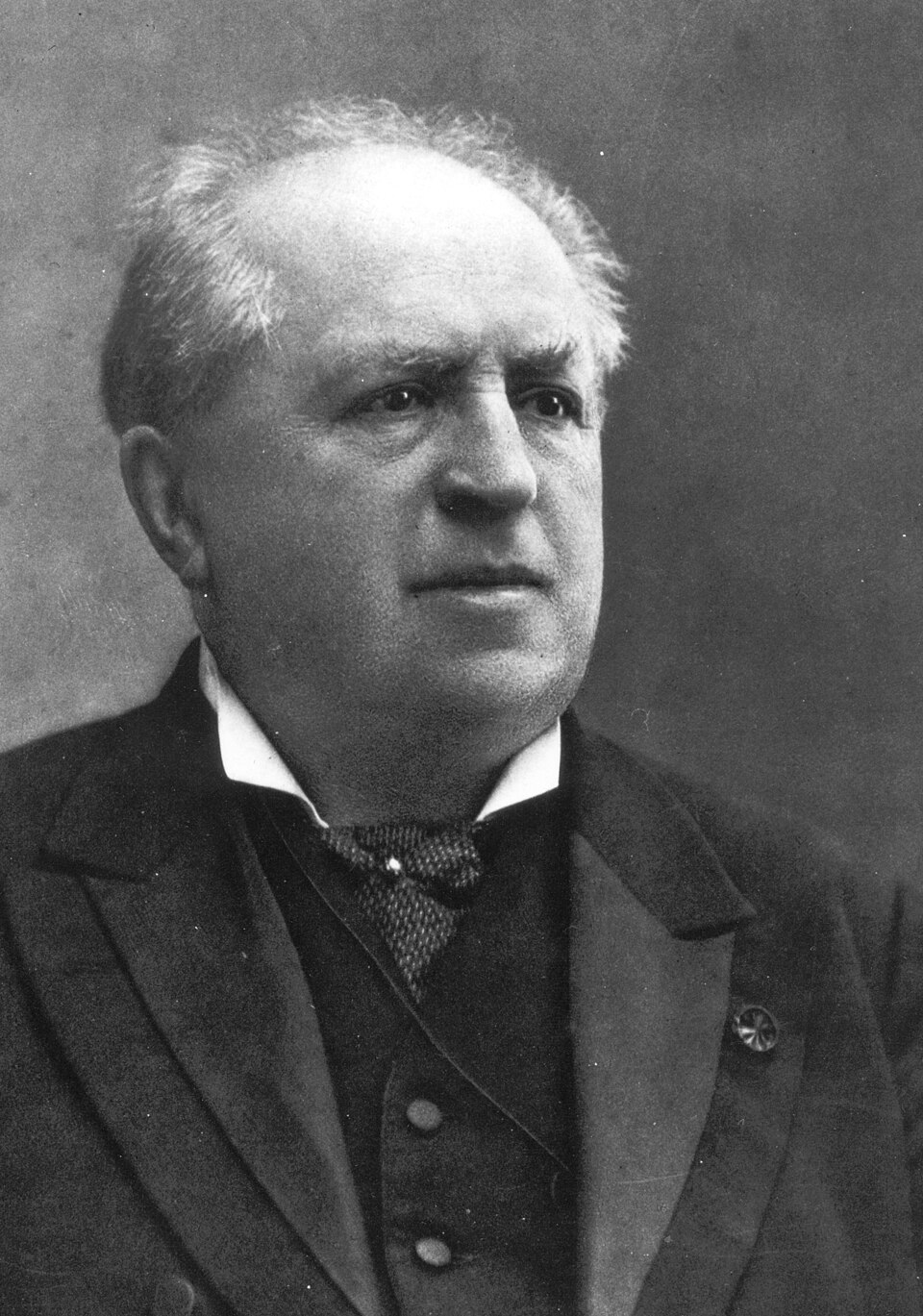
Abraham Kuyper (1837–1920) was a Dutch theologian, pastor, journalist, educator, and politician who helped reshape the relationship between Christianity and modern society. He founded a political party, established a university, organized a Reformed denomination, and eventually became prime minister of the Netherlands. Yet his most enduring influence may be found in his attempt to explain how Christian faith should shape every area of human life, from politics and education to science, business, and the arts.
Kuyper is best known as a leading figure in neo-Calvinism, a movement that sought to apply the theological principles of John Calvin to the challenges of the modern world. He argued that Christianity was not simply a private matter of worship and personal morality. It provided a comprehensive understanding of reality and therefore had implications for all human activities.
His famous declaration that there is not a single square inch of human existence over which Christ does not claim sovereignty captures the central conviction of his thought.
Kuyper’s ideas helped shape Reformed Christianity in the Netherlands and influenced Christian political and social thought internationally. His legacy, however, is not without controversy. His views on religion and society, his political alliances, and his understanding of Christian cultural responsibility continue to generate debate.
To understand Kuyper is to explore one of the most ambitious attempts to connect Protestant theology with the institutions and challenges of modern life.
1. Early Life and Theological Development
Abraham Kuyper was born on October 29, 1837, in Maassluis, in the Netherlands. His father, Jan Frederik Kuyper, was a minister in the Dutch Reformed Church, the country’s historically dominant Protestant denomination.
Kuyper received an excellent education and attended Leiden University, where he studied theology. Leiden was an important centre of modern biblical scholarship and theological liberalism, and Kuyper’s early academic environment exposed him to approaches that questioned traditional Christian doctrines.
His intellectual development was not straightforward. During his university years, he moved away from aspects of the conventional religious outlook in which he had been raised. His doctoral research examined the ecclesiology of the Polish Reformer Jan Łaski, also known as John à Lasco, and received academic recognition.
His subsequent experience as a pastor helped transform his theological outlook. In 1863, he became minister of a congregation in Beesd, a small Dutch town. There he encountered committed Reformed Christians whose convictions challenged his assumptions and encouraged him to take traditional Calvinist theology more seriously.
Kuyper increasingly embraced the doctrines of the Reformed tradition, including the authority of Scripture, divine sovereignty, and the importance of the historic confessions of the church.
This development took place against a wider background of social and religious change. The Netherlands was becoming more industrialized and politically democratic, while traditional religious institutions faced growing intellectual challenges. The Dutch Reformed Church was also struggling with internal disagreements over theology, church government, and the relationship between religion and the state.
Kuyper concluded that orthodox Calvinism did not need to retreat from modern society. Instead, he believed it needed to be articulated anew and applied to the changing circumstances of the nineteenth century.
That conviction would shape the rest of his life.
2. The Rise of Neo-Calvinism
Kuyper’s greatest theological contribution was the development of what became known as neo-Calvinism.
Traditional Calvinism emphasized the sovereignty of God, the authority of Scripture, human sinfulness, salvation by grace, and God’s purposes in creation and redemption. Kuyper retained these central convictions but argued that their implications extended much further than church life and personal salvation.
For Kuyper, the Christian faith offered a comprehensive worldview. It addressed not only what people should believe about God but also how they should understand human nature, knowledge, culture, politics, economics, education, and social relationships.
He rejected the assumption that religious belief could be separated from supposedly neutral public activities. Everyone, he argued, approaches life with fundamental beliefs about reality, human nature, and what constitutes the good. Christians should therefore recognize the influence of their faith on their work and public responsibilities.
This did not mean that every academic discipline should become a branch of theology or that churches should directly control every institution. Rather, Kuyper believed that the Christian faith should inform how people understand and carry out their responsibilities in different areas of life.
His approach encouraged Christians to participate in scholarship, scientific research, political debate, artistic expression, and social reform without treating these activities as inherently secular or spiritually irrelevant.
Three concepts are particularly important for understanding his theology: the sovereignty of God, common grace, and sphere sovereignty.
3. God’s Sovereignty Over All of Life
Kuyper’s understanding of divine sovereignty extended beyond the traditional emphasis on God’s rule over salvation, the church, and the ultimate destiny of the world.
He believed that God was sovereign over the entirety of creation. No part of human existence was independent of God’s authority or excluded from the implications of Christian faith.
This conviction is expressed in his frequently quoted statement:
“There is not a square inch in the whole domain of our human existence over which Christ, who is Sovereign over all, does not cry: ‘Mine!'”
The quotation comes from the inaugural address Kuyper delivered when he established the Free University of Amsterdam in 1880.
The practical implications were extensive. A Christian scientist could investigate the natural world as part of God’s creation. An artist could explore beauty and human experience as meaningful cultural activities. A politician could pursue justice and responsible government. A businessperson could consider the moral implications of economic decisions.
None of these activities needed to be treated as spiritually inferior to preaching or missionary work.
Kuyper therefore challenged a narrow understanding of Christianity in which religious life was largely confined to Sunday worship and individual morality. He wanted Christians to approach their entire lives as service to God.
This emphasis became one of the defining characteristics of neo-Calvinism and later influenced Christian approaches to vocation, cultural engagement, education, and public responsibility.
4. Common Grace: Why Christians Can Work with Non-Christians
Another major contribution was Kuyper’s development of the doctrine of common grace.
In Reformed theology, grace is often discussed in relation to salvation: God’s undeserved favour toward sinners. Kuyper emphasized another dimension of God’s grace, namely the way God sustains the created world and restrains the destructive effects of sin in human society.
Although Christians believe that humanity is affected by sin, Kuyper argued that people who do not share Christian faith can still produce genuine good. Non-Christians can make important scientific discoveries, create beautiful art, establish effective institutions, and demonstrate justice, compassion, and civic responsibility.
This is possible because God’s providential care extends to humanity generally, not only to Christians.
Common grace therefore provided a theological explanation for why Christians should participate in wider society rather than withdraw from it. It also helped Kuyper explain how cultural achievements could be valuable even when they did not arise from explicitly Christian convictions.
This concept complemented his belief that Christians and non-Christians have fundamentally different religious commitments. Christians should recognize those differences without assuming that everything accomplished outside the church is worthless.
Common grace remains influential in Reformed theology, particularly among Christians who seek to combine strong theological convictions with constructive participation in pluralistic societies. However, its precise implications have been disputed within the Reformed tradition, including disagreements over how much common moral ground Christians share with non-Christians.
5. Sphere Sovereignty: A Christian Theory of Society
Perhaps Kuyper’s most distinctive political and social concept is sphere sovereignty.
The idea is that different areas of society have their own responsibilities and forms of authority. The family, church, state, university, business, and other social institutions should not be treated as though they all exist merely to serve the purposes of one dominant institution.
Kuyper believed that God had established an ordered creation in which different communities possess distinct responsibilities. Their authority is real, but it is limited to their particular spheres.
For example, the state has legitimate authority to maintain public order and administer justice. However, it should not exercise unlimited control over the church’s worship or dictate every aspect of university teaching. Similarly, the church should not simply take over the responsibilities of civil government.
The family has responsibilities that cannot be reduced to those of the state, while universities have intellectual responsibilities that should not be subordinated entirely to political interests.
Kuyper’s principle was therefore a way of limiting the concentration of power. It challenged both an all-controlling state and the assumption that religious institutions should govern every other area of society directly.
The concept also informed his advocacy of independent Christian schools and universities. If education had a distinctive social responsibility, then the state should not possess an exclusive right to determine how all education was organized.
Sphere sovereignty has influenced Christian political philosophy, educational theory, and discussions of civil society. Scholars continue to debate its precise relationship to political pluralism, the separation of church and state, and other traditions of limited government. Nevertheless, it remains one of Kuyper’s most recognizable contributions. See George Harinck’s scholarly study of its development at Vrije Universiteit Amsterdam.
6. The Antithesis: Different Worldviews
Alongside common grace and sphere sovereignty, Kuyper emphasized what he called the antithesis.
The term refers to a fundamental opposition between the Christian understanding of reality and worldviews that reject Christianity’s central claims. Kuyper believed that religious convictions shape the way people interpret knowledge, morality, politics, and culture.
He therefore rejected the idea that Christians could simply adopt the assumptions of modern secular thought without considering their theological implications.
This conviction encouraged the development of explicitly Christian institutions. If education and scholarship were shaped by underlying beliefs about reality, Christians needed universities and schools where their faith could inform their work.
However, Kuyper’s understanding of the antithesis was not intended to mean that Christians could never cooperate with non-Christians. His doctrine of common grace provided a basis for cooperation in areas of shared concern.
The relationship between these two ideas remains important. Common grace emphasizes the possibilities of cooperation and shared cultural achievement, while the antithesis emphasizes the differences between religious worldviews.
Critics have sometimes argued that the antithesis encourages excessive separation between Christians and wider society. Supporters contend that it allows Christians to engage with culture without pretending that religious commitments are irrelevant.
Together, these concepts reveal the central tension in Kuyper’s approach: Christians should participate fully in society while remaining conscious of the distinctive convictions that shape their lives.
7. Kuyper’s Political Career
Kuyper did not limit himself to theological writing. He believed that Christian convictions should influence public policy, political institutions, and the organization of society.
In 1872, he became editor of De Standaard, a newspaper that became an important voice for orthodox Protestantism. Journalism gave him a platform from which to communicate his ideas and mobilize a growing constituency.
He entered the Dutch parliament in 1874 and became a leading advocate for the political interests of orthodox Calvinists.
His central political concern was that Protestant Christians should have the freedom to organize their own institutions and participate fully in national life. This was particularly important in education, where debates over state-supported public schooling and religious instruction became a major political issue.
Kuyper argued that religious families should not be disadvantaged because they wanted their children educated according to their convictions. He campaigned for greater equality between religious and public education, including fair treatment in the distribution of public support.
In 1879, he founded the Anti-Revolutionary Party, generally regarded as the first modern political party in the Netherlands. Its name reflected opposition to the political principles associated with the French Revolution, particularly the claim that political authority and social order could be reconstructed on the basis of human autonomy alone.
Kuyper did not oppose every form of political or social change. Rather, he sought to develop a political order grounded in Christian principles, historical continuity, and the recognition that human authority is limited by obligations beyond the state.
His party brought together Protestant voters who had previously lacked a comparable national political organization. Through newspapers, public meetings, party structures, and electoral campaigns, Kuyper helped turn a religious constituency into an organized political movement.
His political career demonstrated that he regarded democratic participation, party organization, and mass communication as important tools for advancing his programme.
Becoming prime minister
In 1901, Kuyper became prime minister of the Netherlands, serving until 1905.
His government was a landmark in the development of organized Christian politics in the country. It demonstrated that a movement grounded in orthodox Protestant convictions could participate in parliamentary government and exercise national political authority.
As prime minister, Kuyper had to move beyond the role of a religious advocate and make decisions within the constraints of coalition politics, parliamentary majorities, economic interests, and international affairs.
His government faced labour unrest, and its response to the major railway strikes of 1903 became particularly controversial. The government introduced measures directed against strikes by public employees and railway workers. Opponents regarded these measures as an attack on workers’ ability to organize and exert political pressure.
The episode illustrates an important distinction between Kuyper’s theoretical commitment to differentiated social authority and the practical choices he made as head of government. His approach to social order and industrial conflict was not universally accepted, even among those who shared aspects of his Christian outlook.
Kuyper’s political influence also extended to foreign affairs, including his positions on the Boer cause in South Africa and Dutch colonial policy in the East Indies. Historians have examined the tensions between his stated principles and the realities of imperial power. His political record, therefore, deserves examination alongside his theological achievements rather than being treated simply as an application of them. For a scholarly discussion, see Robert J. Joustra’s article, Abraham Kuyper among the Nations.
8. The Free University of Amsterdam
Kuyper’s commitment to Christian education led to one of his most significant institutional achievements.
In 1880, he helped establish the Free University of Amsterdam, known in Dutch as the Vrije Universiteit. The institution was founded as a university independent of direct state control and committed to a Christian understanding of scholarship.
The word free referred principally to its independence from both the state and the established church. Kuyper wanted an institution in which Christian convictions could shape academic work without the university being controlled by existing political or ecclesiastical authorities.
He believed that scholarship always rested on fundamental assumptions about reality. A Christian university should therefore be able to investigate the world from an explicitly Christian perspective while maintaining the integrity of its academic disciplines.
Kuyper served as one of its founding professors of theology and helped establish its intellectual direction.
The university embodied his belief that Christian faith should influence higher education without reducing every academic subject to religious instruction. Theology, history, philosophy, and other disciplines each had their own questions and methods, but they could be pursued within a broader Christian understanding of creation.
The Free University became a major centre for neo-Calvinist scholarship and helped train generations of Christian intellectuals, theologians, and public leaders.
Its establishment also demonstrated how Kuyper’s abstract theological ideas could be translated into lasting institutions.
9. Church Reform and the Reformed Churches
Kuyper’s theological convictions also led to major changes within Dutch Protestantism.
He became increasingly dissatisfied with the theological direction and institutional structure of the Dutch Reformed Church. He believed that the church needed to recover its Reformed confessional commitments and gain greater independence from state influence.
His reform efforts contributed to a major church conflict in 1886 known as the Doleantie. Kuyper and his supporters separated from the established church, forming independent Reformed congregations.
In 1892, these congregations united with an earlier secessionist movement, the Secession of 1834, to establish the Reformed Churches in the Netherlands (Gereformeerde Kerken in Nederland).
This development created a major institutional home for the neo-Calvinist movement.
Kuyper’s role was not simply that of a theologian developing new ideas. He helped organize a network of churches, schools, newspapers, political associations, and academic institutions through which those ideas could be sustained and transmitted.
However, the divisions also reveal the contentious nature of his reforming programme. His efforts strengthened orthodox Reformed institutions, but they contributed to fragmentation within Dutch Protestantism and created lasting disagreements over church unity, theological authority, and the appropriate relationship between Christianity and modern culture.
10. Kuyper’s Other Major Writings
Kuyper was a prolific author whose influence extended beyond his political and institutional activities.
Among his most important works are:
- Lectures on Calvinism (1898): A series of lectures delivered at Princeton Theological Seminary in the United States. Kuyper presented Calvinism as a comprehensive system of thought with implications for religion, politics, science, and art. The lectures introduced many English-speaking readers to his approach.
- The Work of the Holy Spirit (1888; English translation published in 1900): A substantial theological work examining the activity of the Holy Spirit in the church and in the Christian life.
- Encyclopaedia of Sacred Theology (1894): A work exploring the nature, organization, and presuppositions of theological scholarship.
- Our Program (1879): An important statement of the political principles associated with the Anti-Revolutionary Party.
- Common Grace (1895–1901, originally published as a series of articles): His extensive treatment of God’s providential work in sustaining human society and culture.
These works illustrate the breadth of his interests. Kuyper was not content to develop an abstract theory of Christian public life. He sought to apply his ideas to theology, education, political organization, and cultural activity.
His 1898 visit to the United States was particularly important for his international reputation. The Princeton lectures introduced his thought to American theologians and helped establish his place in discussions about Christianity’s relationship to modern culture.
11. How Was Kuyper Received During His Lifetime?
Kuyper was both admired and fiercely opposed.
Among orthodox Dutch Calvinists, he became a major leader who offered a way to preserve traditional Protestant convictions while participating in modern political and cultural life. His ability to organize institutions and mobilize supporters gave his movement a significance that extended beyond theology.
Supporters admired his intellectual energy, political skills, and conviction that Christians should not abandon public life to secular ideologies. They saw his university, newspaper, political party, and church reforms as practical expressions of a coherent Christian vision.
His influence was also recognized internationally. During his 1898 visit to Princeton, he delivered the Stone Lectures to an American theological audience, introducing his distinctive interpretation of Calvinism to a wider public.
Yet his opponents regarded him as a divisive figure. Theological liberals objected to his opposition to modernist approaches to Christianity. Church leaders who favoured existing structures resisted his reform programme and the separations it produced. Political opponents challenged his anti-revolutionary principles and his efforts to secure a greater role for religious organizations in public affairs.
Even within Christian circles, his political strategy generated disagreements. His willingness to work with Roman Catholic political groups to achieve shared objectives raised questions among some Protestants about whether political compromise weakened the distinctiveness of the Reformed faith.
His record as prime minister further complicated his reputation. His response to industrial conflict and his positions on colonial questions attracted criticism, while his supporters defended his approach to social order and national interests.
Kuyper was therefore not universally accepted as the representative of Christian engagement with society. He was a formidable public figure whose influence was inseparable from the conflicts he helped generate.
His political prominence diminished after his government left office in 1905, but he remained influential in Dutch public life and continued to write and participate in political and ecclesiastical debates until his death on November 8, 1920.
12. Kuyper’s Lasting Legacy
Kuyper’s influence continued well beyond his lifetime. His ideas shaped Dutch Reformed institutions and became important in Christian discussions about education, politics, philosophy, and cultural engagement.
Neo-Calvinism and Christian worldview thinking
Kuyper helped establish the idea that Christianity should be understood as a comprehensive worldview rather than simply a collection of doctrines concerning salvation and worship.
This emphasis influenced later Reformed thinkers, including the Dutch philosopher Herman Dooyeweerd, who developed a systematic philosophy informed by neo-Calvinist principles.
It also influenced Christian colleges and universities in North America, where scholars explored how theological convictions might inform academic disciplines without replacing their distinctive methods.
Christian political thought
Kuyper’s political ideas continue to inform discussions about religious freedom, civil society, the limits of government, and the participation of religious communities in public life.
His principle of sphere sovereignty remains particularly influential among Christians who seek to balance a commitment to religious convictions with respect for institutional independence and political pluralism.
His thought also helped shape traditions of Christian democratic and socially organized political activity, although later movements adapted his ideas in different ways.
Education and institutional independence
The Free University of Amsterdam and the wider network of Christian schools associated with the neo-Calvinist tradition demonstrate the practical consequences of Kuyper’s philosophy.
His legacy remains visible wherever Christians establish independent institutions to pursue education, scholarship, and social service according to their convictions.
International influence
Kuyper’s ideas have been especially influential among Reformed and evangelical Christians in the Netherlands, North America, and other parts of the world.
His writings are frequently discussed in debates about Christian nationalism, political pluralism, public theology, and the relationship between faith and culture. These modern debates do not always produce the same conclusions, and Kuyper’s thought should not be identified automatically with any single contemporary political movement.
His emphasis on Christ’s sovereignty over all of life has inspired Christians who want to engage with culture, while his doctrine of sphere sovereignty has also been used to argue against the concentration of authority in any single institution.
Criticism and reassessment
Kuyper’s legacy is not without serious questions. His opposition to theological liberalism and his insistence on distinctively Christian institutions can raise concerns about how religious communities should relate to pluralistic societies. His political record also invites scrutiny of the difference between his theoretical principles and his actual policies.
His writings and political actions must be understood within their historical context, including the social hierarchies and colonial assumptions of his era. Scholars continue to debate how these aspects of his life should affect contemporary use of his ideas.
The ongoing reassessment of Kuyper is evidence of his continuing importance. He is not simply a historical figure whose ideas have been preserved unchanged; he remains a thinker whose work is interpreted, adapted, and challenged by later generations.
Conclusion: Why Abraham Kuyper Still Matters
Abraham Kuyper was a remarkable example of a theologian who sought to translate his convictions into public institutions and political action. As a pastor and church reformer, he helped establish a new Reformed denomination. As an educator, he founded the Free University of Amsterdam. As a politician, he organized the Anti-Revolutionary Party and served as prime minister of the Netherlands from 1901 to 1905.
Yet his most enduring contribution was his insistence that Christian faith has implications for the whole of life.
Through neo-Calvinism, common grace, sphere sovereignty, and his emphasis on the antithesis between worldviews, Kuyper developed a framework for thinking about the relationship between theology and culture. He argued that Christians should neither withdraw from society nor assume that their faith is irrelevant to public life.
His ideas continue to influence debates about education, politics, scholarship, religious freedom, and cultural responsibility. At the same time, his political record and his approach to religious difference remind us that applying theological principles to complex social realities is never straightforward.
Kuyper’s central question remains relevant: if Christian faith concerns the whole of reality, how should it shape the way Christians study, work, govern, create, and live alongside those who do not share their beliefs?
His life offers one influential answer—and a continuing invitation to examine the possibilities and challenges of bringing religious convictions into public life.
For more information The Legacy of Abraham Kuyper. (Amazon affiliate link)