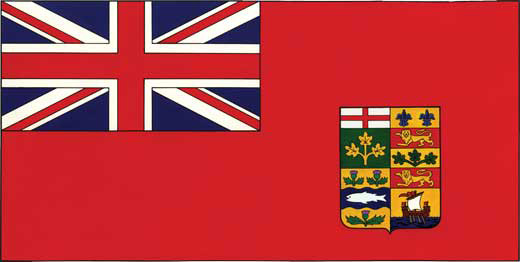
When the Dominion of Canada came into existence on July 1, 1867, it was a deeply religious country. Christianity permeated nearly every aspect of public life, from politics and education to social services and national identity. Churches were among the most influential institutions in the new nation, and religious affiliation was considered a normal and important part of citizenship.
Yet, unlike some European countries, Canada did not establish a national church. At the same time, it did not adopt the American model of a strict constitutional separation between church and state. Instead, Canada developed a unique relationship in which government and churches cooperated closely while maintaining separate institutional identities.
The early years of Confederation reveal a nation that was undeniably Christian in character but already contained seeds that would eventually grow into a more secular society.
A Christian Dominion
The four original provinces of Confederation—Ontario, Quebec, Nova Scotia, and New Brunswick—were overwhelmingly Christian. Census figures from the late nineteenth century indicate that well over 95 percent of Canadians identified with a Christian denomination.
Religion was not merely a private matter. Churches operated:
- Schools
- Hospitals
- Orphanages
- Charitable organizations
- Universities
- Mission organizations
- Newspapers and publishing houses
Clergy were highly respected public figures and often exercised significant moral and political influence.
Public meetings frequently opened with prayer, government ceremonies included Christian observances, and the Christian Sabbath shaped business and social life.
The Main Christian Groups
Roman Catholics
Catholic Church in Canada was the largest and most politically influential Christian body in Quebec and significant in parts of Ontario and the Maritime provinces.
French Canada, in particular, was profoundly Catholic. The church exercised enormous influence over:
- Education
- Health care
- Social services
- Family life
- Political identity
The clergy in Quebec often acted as community leaders and intermediaries between the people and the government.
Archbishops and bishops were major public figures, and many politicians consulted church leaders on important matters.
Anglicans
The Anglican Church of Canada enjoyed considerable prestige because of its historic ties to Britain and the British Crown.
Although Canada did not have an established church, Anglicanism often occupied a privileged cultural position. Many members of the political and economic elite belonged to Anglican congregations.
Several universities, including University of King’s College and Trinity College, had Anglican roots.
Presbyterians
The Presbyterian Church in Canada was especially influential among Scottish immigrants and their descendants.
Presbyterians were strongly represented in business, education, and politics. They often emphasized:
- Education
- Moral reform
- Temperance
- Personal piety
- Civic responsibility
Many political leaders, including Canada’s first prime minister, came from Presbyterian backgrounds.
Methodists
The Methodist Church of Canada was one of the fastest-growing denominations in nineteenth-century Canada.
Methodists became a driving force behind:
- Evangelism
- Temperance campaigns
- Social reform
- Mission work
- Public education
They would later become major contributors to the movement known as the Social Gospel.
Baptists and Other Groups
The Canadian Baptists of Atlantic Canada and other Baptist groups had strong regional influence, particularly in the Maritimes.
Smaller communities of:
- Lutherans
- Mennonites
- Congregationalists
- Quakers
- Jews
also existed, though they exercised less national influence during the early Confederation period.
The Influence of the Churches
Churches had immense influence in shaping Canadian society.
Education
The churches founded many of Canada’s early universities, including:
- McGill University
- Queen’s University
- University of St. Michael’s College
Denominational schools were common, and religious instruction was considered essential to education.
Health Care
Catholic religious orders and Protestant charities founded many of Canada’s earliest hospitals and social institutions.
Moral Reform
Churches influenced public policy on issues such as:
- Alcohol consumption
- Sabbath observance
- Family life
- Divorce
- Sexual morality
Politics
Although clergy did not govern the country directly, politicians ignored church opinion at their peril. Religious leaders often had considerable influence over voters.
Church and State in Canada Compared to the United States
The relationship between church and government in Canada differed significantly from that in the United States.
The American Model
The United States Constitution includes the First Amendment:
“Congress shall make no law respecting an establishment of religion, or prohibiting the free exercise thereof.”
This created a constitutional principle prohibiting a national church and eventually developed into the doctrine of the separation of church and state.
The Canadian Model
Canada’s Constitution contained no equivalent provision.
The British North America Act, 1867 did not establish a church, nor did it create a formal separation of church and state.
Instead, Canada adopted a model of cooperation and accommodation.
Examples included:
- Public funding for denominational schools.
- Government ceremonies with Christian elements.
- Public recognition of Christian holy days.
- Frequent cooperation between churches and government institutions.
The state was officially neutral among denominations but was not religiously neutral in the modern secular sense.
Many historians describe early Canada as a “Christian country” in both culture and public life.
Religion and the First Prime Ministers
Sir John A. Macdonald
John A. Macdonald was raised in the Presbyterian tradition and remained broadly committed to Christianity throughout his life.
Macdonald was not known for deep theological reflection or strict personal piety. He enjoyed drinking and sometimes lived in ways that fell short of Victorian moral expectations.
Nevertheless, he believed Christianity was an essential foundation for society and frequently employed Christian language in public speeches.
Alexander Mackenzie
Alexander Mackenzie was a devout Baptist and perhaps the most personally religious of Canada’s early prime ministers.
He regularly attended church, taught Sunday school, and was known for his personal integrity and moral seriousness.
Sir John Abbott
John Abbott was an Anglican and maintained conventional Christian commitments.
Sir John Thompson
John Sparrow David Thompson was a devout Roman Catholic whose faith was central to his personal identity and public life.
Sir Mackenzie Bowell
Mackenzie Bowell was a committed member of the Orange Order and represented a strong Protestant political tradition.
Overall, Canada’s early prime ministers were generally practicing Christians who assumed that religion had an important role in public life.
Was Canada Intended to Be a Secular Nation?
In one sense, no.
The Fathers of Confederation did not envision Canada as a secular nation in the modern sense of excluding religion from public life.
The new Dominion possessed:
- Christian assumptions about morality.
- Christian institutions.
- Christian public ceremonies.
- Political leaders who openly professed Christian faith.
However, there were several features that pointed toward future secularization.
No Established National Church
Unlike England, Canada never created an official state church.
Religious Pluralism
The need to accommodate both Protestants and Catholics encouraged government neutrality between denominations.
Constitutional Compromise
Confederation depended on cooperation between communities with different religious traditions, making sectarian dominance impractical.
Immigration
As immigration increased, religious diversity gradually expanded beyond the original Protestant-Catholic framework.
Liberal Political Principles
British liberal ideas concerning religious liberty and freedom of conscience increasingly shaped Canadian political culture.
These developments created conditions that eventually made modern secularism possible.
The Long Road to Secular Canada
The dramatic secularization of Canada did not occur until the twentieth century, especially after the 1960s.
Several developments accelerated this change:
- Declining church attendance.
- The Quiet Revolution in Quebec.
- Increased immigration and religious diversity.
- Expansion of government social services previously operated by churches.
- Changing attitudes toward morality and personal autonomy.
By the late twentieth century, Canada had become one of the more secular Western nations in terms of institutional religion, even while many Christian symbols and traditions remained embedded in public life.
Conclusion
The Canada that emerged in 1867 was a profoundly Christian society. Roman Catholics, Anglicans, Presbyterians, Methodists, and Baptists exercised enormous influence over education, health care, politics, and public morality. The first prime ministers generally regarded Christianity as an essential foundation for national life and did not envision a rigid separation between religion and government.
Yet Canada also began its national life without an established church and with a commitment to accommodating multiple Christian traditions. This combination of cooperation between church and state, religious pluralism, and institutional neutrality planted the seeds that would eventually grow into the more secular and religiously diverse Canada of today.
In the earliest years of Confederation, Canada was neither a theocracy nor a secular republic. It was, rather, a Christian Dominion whose public life was shaped by faith even as the foundations for future secularization were quietly being laid.