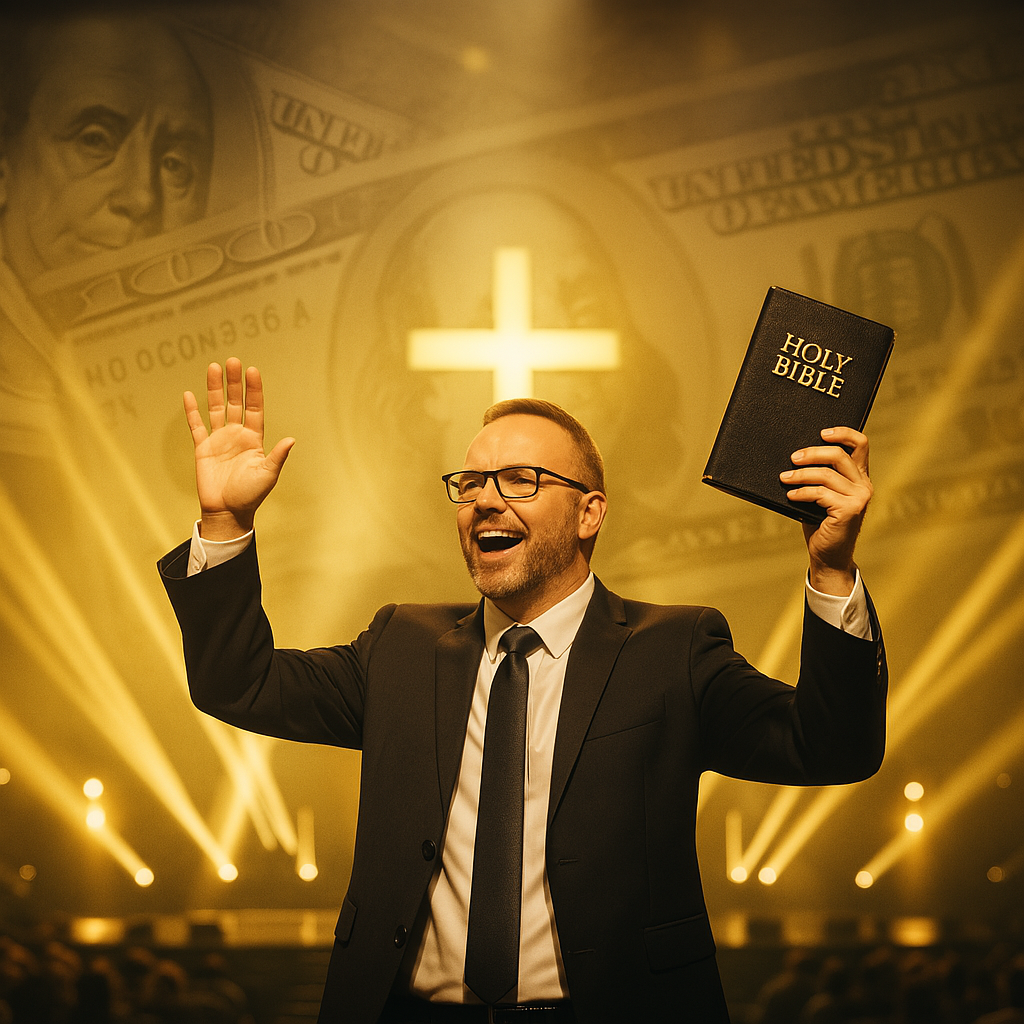

The phrase “separation of church and state” is one of the most discussed and often misunderstood concepts in American history. Some view it as a wall protecting religion from government interference, while others see it as a principle preventing religion from influencing public life. The reality is more nuanced. The idea emerged from centuries of religious conflict in Europe, was shaped by colonial experiences in America, and has evolved through constitutional interpretation and Supreme Court decisions.
European Influences
The American understanding of church-state relations did not arise in a vacuum. For centuries, European governments had maintained established churches that enjoyed state support and often persecuted religious dissenters.
In medieval Europe, the Roman Catholic Church and political rulers were deeply intertwined. The Protestant Reformation of the sixteenth century complicated matters further. Following the teachings of reformers such as Martin Luther and John Calvin, various Protestant churches became tied to particular states and kingdoms.
England’s experience was especially influential for the American colonies. After the establishment of the Church of England, religious dissenters—including Puritans, Baptists, Quakers, and Catholics—often faced discrimination or persecution. The English Civil War, the Restoration, and the Glorious Revolution all demonstrated the dangers of combining political and religious authority.
The writings of the English philosopher John Locke had a profound impact on the American founders. In his work, the A Letter Concerning Toleration, Locke argued that civil government existed to protect life, liberty, and property, not to save souls or enforce religious belief. Genuine faith, he insisted, could not be compelled by government.
Religious Experience in Colonial America
The American colonies offered a mixed picture regarding religion and government.
Some colonies, such as Massachusetts Bay Colony, maintained established churches and often punished religious dissenters. Ironically, some of those who had fled persecution in Europe became persecutors themselves.
Other colonies experimented with religious liberty. The colony of Rhode Island, established by Roger Williams, became a haven for religious dissenters. Williams argued that government should have no authority over matters of conscience and famously described a “hedge or wall of separation” between the church and the wilderness of the world.
Similarly, Pennsylvania, founded by William Penn, became known for religious tolerance.
By the eighteenth century, many Americans had experienced both the benefits and dangers of established religion. The religious diversity of the colonies made any single national church increasingly impractical.
The Influence of the Great Awakening
The First Great Awakening also shaped American views. Revivalists such as George Whitefield emphasized personal conversion and challenged established religious authorities.
The revival movement encouraged the idea that faith should be voluntary rather than imposed by government. Many Baptists and other evangelical groups became strong advocates for religious liberty because they had often suffered under established churches.
The Founding Generation and the Constitution
Several key figures shaped the American approach to church and state.
Thomas Jefferson
Thomas Jefferson was perhaps the most famous advocate of religious liberty. In 1786, he authored the Virginia Statute for Religious Freedom, which declared that no person should be compelled to support or attend any religious worship.
Jefferson later wrote in an 1802 letter to the Danbury Baptist Association that the First Amendment built “a wall of separation between Church and State.” This phrase does not appear in the Constitution itself but has profoundly influenced later legal interpretation.
James Madison
James Madison played an even more direct role in shaping the constitutional framework. His 1785 document, the Memorial and Remonstrance Against Religious Assessments, opposed a proposal to fund Christian teachers with tax money.
Madison argued that religion could flourish best when left independent of government control.
George Washington
George Washington supported religious liberty while also recognizing the importance of religion for public morality. His famous letter to the Hebrew Congregation of Newport affirmed that the United States gave “to bigotry no sanction, to persecution no assistance.”
The First Amendment
The constitutional basis for church-state relations appears in the First Amendment:
“Congress shall make no law respecting an establishment of religion, or prohibiting the free exercise thereof.”
These two clauses are commonly called:
- The Establishment Clause.
- The Free Exercise Clause.
The original purpose of these provisions was primarily to prevent the federal government from establishing a national church and to protect the religious liberty of citizens.
Importantly, several states still maintained established churches after the Constitution was ratified. Massachusetts did not end its state-supported church until 1833. This fact suggests that many of the founders did not envision a complete exclusion of religion from public life.
What Did “Separation of Church and State” Originally Mean?
The original meaning was not necessarily the removal of religion from government institutions. Rather, it meant:
- No national church.
- No government coercion in matters of faith.
- Protection of religious minorities.
- Freedom for religious communities to govern themselves.
Early American governments continued practices that today might seem inconsistent with strict separation:
- Legislative prayers.
- Presidential proclamations of thanksgiving.
- Government chaplains.
- Public references to God.
The founders generally sought institutional separation rather than cultural secularization.
Nineteenth-Century Developments
Throughout the nineteenth century, Protestant Christianity retained significant cultural influence. Public schools frequently used the Bible and offered Protestant prayers.
Conflicts arose as immigration increased, particularly with the arrival of large numbers of Roman Catholics. Catholics objected to the effectively Protestant character of public education and often established their own school systems.
The phrase “separation of church and state” gained increasing prominence during these debates.
The Supreme Court and the Modern Interpretation
The modern understanding of church-state separation developed largely through Supreme Court decisions in the twentieth century.
Everson v. Board of Education (1947)
In Everson v. Board of Education, the Supreme Court applied the Establishment Clause to state governments and quoted Jefferson’s “wall of separation” metaphor.
Engel v. Vitale (1962)
In Engel v. Vitale, the Court ruled that state-sponsored prayer in public schools violated the Establishment Clause.
Lemon v. Kurtzman (1971)
In Lemon v. Kurtzman, the Court established the “Lemon Test,” which evaluated whether government actions concerning religion had a secular purpose and avoided excessive entanglement with religion.
Recent Decisions
In recent decades, the Court has moved toward a more accommodationist approach.
Cases such as:
- Town of Greece v. Galloway
- Kennedy v. Bremerton School District
- Carson v. Makin
have emphasized historical practices and protections for religious expression.
The Court has increasingly relied on history and tradition rather than the older Lemon Test.
Ongoing Challenges
Several questions continue to generate debate:
Religion in Public Schools
Should schools permit prayer? Can religious clubs meet on campus? May teachers display religious symbols?
Government Funding
Can religious schools receive public funds? Should faith-based charities receive government grants?
Religious Symbols
Should crosses, Ten Commandments monuments, or nativity scenes appear on public property?
Religious Liberty and Civil Rights
How should the government balance religious freedom with anti-discrimination laws?
These questions reveal the ongoing tension between avoiding government establishment of religion and protecting the free exercise of religion.
The Practice of Church and State Today
The United States has never embraced a fully secular model like that of modern France, nor has it established an official national church like England.
Instead, America has developed a unique system characterized by:
- Institutional separation between church and government.
- Robust protection of religious liberty.
- Significant religious participation in public life.
- Accommodation of religion when it does not amount to governmental establishment.
This arrangement has allowed an extraordinary diversity of religious communities to flourish.
Conclusion
The American concept of the separation of church and state emerged from centuries of European religious conflict, colonial experiences of persecution and diversity, and Enlightenment ideas about liberty and conscience. Leaders such as Roger Williams, John Locke, Thomas Jefferson, and James Madison all contributed to its development.
The original purpose was not to remove religion from society or silence religious voices in public affairs. Rather, it was to prevent government coercion in matters of faith and to protect the freedom of religious communities.
Over the past two centuries, courts and political movements have interpreted the principle in different ways. The resulting debates continue to shape American public life. Yet the enduring goal remains the same: preserving both religious liberty and a government that neither establishes nor suppresses religion.