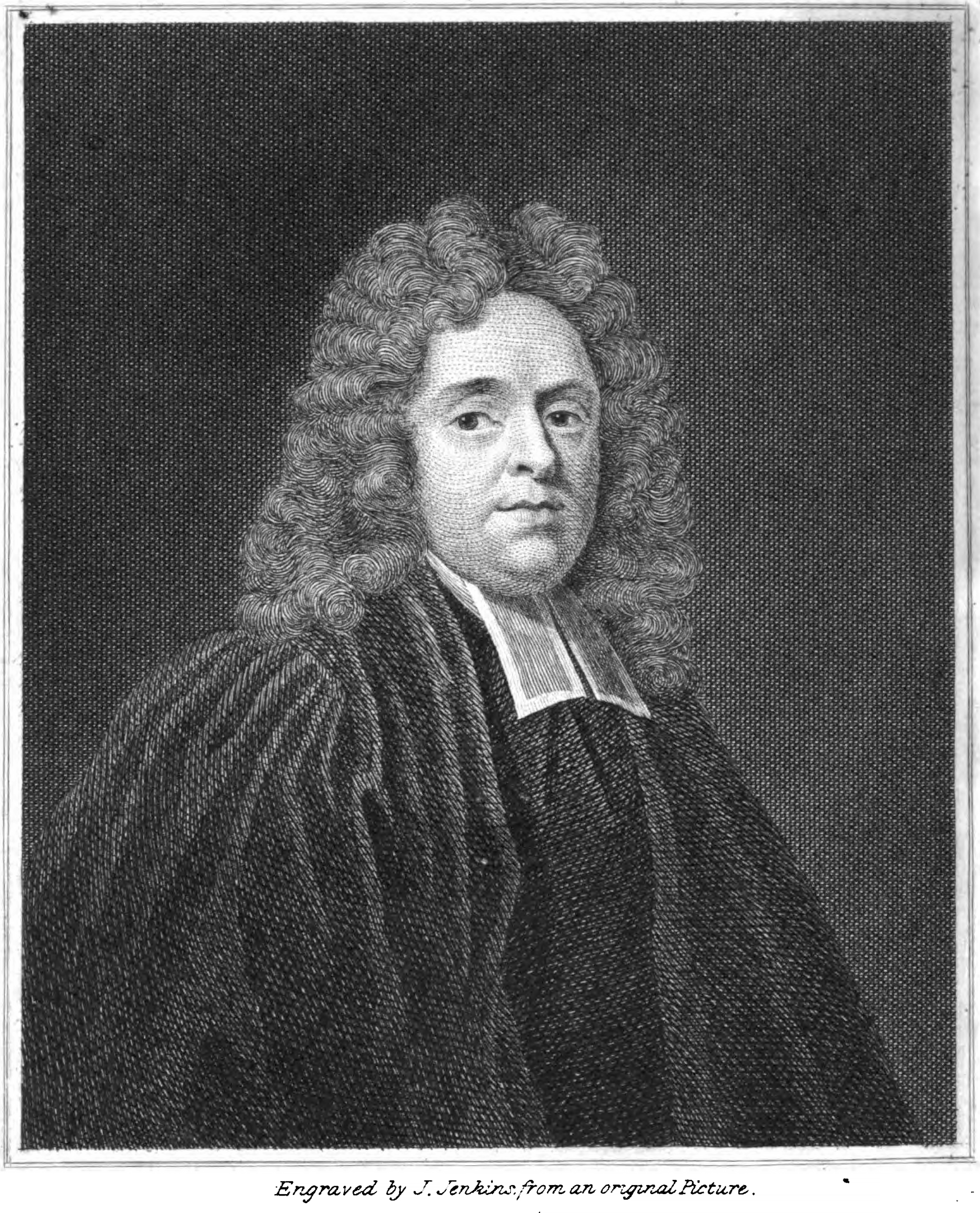
When Christians think of Bible commentaries, one of the names that continues to appear is Matthew Henry. His Exposition of the Old and New Testaments has been read by generations of pastors, Bible teachers and ordinary Christians. Although Henry died more than three centuries ago, his commentary remains widely available and continues to influence the way many Christians read Scripture.
Henry was not a university professor or a professional biblical scholar in the modern sense. He was an English Nonconformist minister whose primary concern was to explain the Bible in a way that would shape Christian belief and Christian living. His commentary was not primarily concerned with the technical questions that dominate modern academic commentaries. Instead, Henry wanted readers to understand what Scripture meant, how its teachings fit together, and how those teachings should affect their lives.
To understand Matthew Henry, however, it is important to understand the religious world in which he lived.
England After the Puritans
Matthew Henry was born on October 18, 1662, at Broad Oak, near the border of Flintshire and Shropshire. His birth came only months after the Act of Uniformity of 1662, one of the defining events in the history of English Nonconformity.
The Act required clergy in the Church of England to conform to the church’s liturgy and practices. Thousands of ministers who could not conscientiously comply were removed from their positions in what became known as the Great Ejection.
Henry’s father, Philip Henry, was one of those ejected ministers.
Matthew therefore grew up in a household shaped by the Puritan and Nonconformist tradition. His father’s ministry and example had a profound influence on him. Rather than being raised outside the established religious culture of England, Henry was part of a dissenting Protestant tradition that regarded Scripture, personal piety and practical holiness as central to Christian life.
This background helps explain the character of Henry’s later ministry.
He inherited much from the Puritans, particularly their conviction that the Bible was not merely a book to be analysed but God’s Word to be believed and obeyed.
From Law to Ministry
Henry initially studied law. In 1685 he entered Gray’s Inn in London, one of the Inns of Court.
But theology remained his primary interest. He studied at the Nonconformist academy of Thomas Doolittle at Islington and eventually abandoned his legal career in favour of Christian ministry.
In 1687 he became pastor of a Presbyterian congregation in Chester.
Henry remained in Chester for approximately twenty-five years. His ministry involved much more than preaching on Sundays. He preached frequently, taught Scripture, ministered to people in need and became known as a careful and energetic expositor of the Bible.
His congregation grew, and his reputation spread beyond Chester.
In 1712 he moved to Hackney, near London, where he continued his ministry among English Dissenters.
His time in London was short. In 1714, while travelling, Henry became seriously ill and died at Nantwich on June 22 at the age of fifty-one.
His life was relatively short, but his literary influence would far outlast his ministry.
What Was Matthew Henry Known For?
During his lifetime, Henry was known primarily as a Nonconformist minister, preacher and biblical expositor.
His reputation was not initially based on a massive theological system. Instead, he became known for his ability to take a biblical passage and draw out its meaning and practical implications.
Henry had a gift for expressing theological ideas in memorable language.
He could explain a complicated biblical theme in straightforward English and then connect it with prayer, Christian character, family life, temptation, worship and daily conduct.
This combination of biblical exposition and practical application became one of the defining characteristics of his work.
Henry was therefore part of a long Protestant tradition in which preaching was expected to accomplish more than simply communicate information. The sermon was intended to instruct the mind, convince the conscience and transform the life.
That same approach became the defining feature of his commentary.
The Great Commentary
Henry’s most famous work is usually known as Matthew Henry’s Commentary, although its original title was An Exposition of the Old and New Testaments.
Henry began the project in 1704.
The work was published in stages, beginning in 1708, and Henry continued writing until his death. He completed his exposition of the Old Testament and worked through the Gospels and Acts in the New Testament.
He did not live long enough to complete the entire New Testament.
After his death, a group of Nonconformist ministers completed the commentary on the remaining books, from Romans through Revelation, drawing upon Henry’s notes and writings. Consequently, the complete commentary is not entirely the work of Matthew Henry himself.
This distinction is important.
When Christians today refer to “Matthew Henry’s Commentary on the Whole Bible,” they are referring to a work whose great majority was written by Henry but whose final New Testament sections were completed by others after his death.
What Kind of Commentary Was It?
Henry’s commentary was fundamentally expository, theological and devotional.
It was not a modern critical commentary.
Modern biblical scholars frequently investigate questions such as:
- What is the date of this biblical book?
- Who wrote it?
- What sources were used?
- What did the original Hebrew or Greek expression mean?
- How does the passage compare with other ancient literature?
- What can archaeology tell us about the historical setting?
Henry was interested in some historical and linguistic questions, but these were not the centre of his project.
His central question was closer to:
What does this passage teach us about God, humanity, salvation and Christian living?
That is why Henry could spend considerable time drawing theological and practical lessons from relatively short biblical passages.
His commentary often follows a pattern:
explanation → doctrine → application.
He explains the passage, identifies theological principles within it and then asks what those principles mean for the Christian life.
Henry’s Theological Interpretation
Henry’s theology was firmly rooted in the Protestant tradition of his time.
He was a Reformed-leaning Nonconformist, deeply influenced by Puritan theology. His interpretation emphasizes the sovereignty of God, human sinfulness, divine grace, the authority of Scripture, the necessity of faith and the importance of holy living.
At the same time, Henry’s commentary should not be reduced to a systematic presentation of Calvinism.
His primary concern was exposition rather than theological polemic.
The Sovereignty of God
One of the recurring themes in Henry is the sovereignty and providence of God.
History is not ultimately random. God acts through creation, human history and redemption.
This perspective allows Henry to read biblical narratives as more than accounts of ancient events. They reveal God’s character and God’s purposes.
Human Sin and Divine Grace
Henry consistently takes seriously the biblical teaching concerning human sin.
Human beings need God’s grace because they cannot save themselves through their own moral efforts.
This leads naturally to Henry’s emphasis upon Christ, repentance, faith and transformed living.
Scripture as a Unified Story
Henry also reads the Bible as a unified Christian Scripture.
The Old Testament is not treated merely as an ancient collection of Jewish writings. Henry repeatedly sees the Old Testament pointing toward Christ and the gospel.
This is characteristic of older Christian interpretation, particularly the Protestant tradition in which Henry stood.
His approach can sometimes appear more explicitly Christological than modern historical-critical interpretation would allow. Nevertheless, it reflects the conviction that the whole Bible ultimately belongs to one divine story of creation, fall, redemption and restoration.
Christianity as a Way of Life
Perhaps Henry’s most distinctive characteristic is his insistence that theology should produce Christian character.
Knowing biblical doctrine is not enough.
The Christian should become more prayerful, humble, obedient, generous, faithful and holy.
Consequently, Henry frequently moves from interpretation into exhortation.
This is one reason his commentary became useful not only to pastors but also to people reading the Bible devotionally.
Henry and the Puritan Tradition
Although Henry is often described simply as a “Puritan,” the chronology requires some qualification.
The classic Puritan era had largely passed by the time Henry reached adulthood. The Great Ejection occurred in 1662, the year of his birth, while Henry began his ministry in the 1680s.
He therefore belonged to the later Nonconformist tradition that inherited and continued much of Puritan theology and spirituality.
This distinction is helpful.
Henry was not simply reproducing the theology of the seventeenth-century Puritans. He was taking that tradition into the eighteenth century and presenting it in a form accessible to a new generation.
His work therefore represents something of a bridge between the Puritan world and the emerging evangelical culture of the eighteenth century.
His Style
One reason Henry’s commentary survived when many other eighteenth-century commentaries disappeared is his writing style.
He was capable of being lengthy, but he was rarely merely academic.
Henry frequently used memorable phrases, contrasts, illustrations and concise observations. His prose has an unmistakable devotional quality.
He also had a talent for finding practical implications in biblical passages.
For Henry, almost every passage had something to say about Christian life.
A genealogical list could become an occasion for reflection on God’s faithfulness.
A biblical warning could become an exhortation to examine one’s own life.
A story about an Old Testament character could become a lesson about faith, temptation, obedience or divine providence.
This made Henry particularly useful to preachers.
Henry and the Eighteenth-Century Evangelical Revival
Henry’s influence continued to grow after his death.
He became an important resource for the evangelical movement that developed during the eighteenth century.
Figures associated with the evangelical revival, including George Whitefield and the Wesleys, were familiar with his work. His commentary helped provide evangelical preachers with a framework for moving from biblical text to theological and practical application.
His influence was not limited to ministers.
The commentary became a household resource for Christians who wanted assistance in reading Scripture.
This was particularly significant in an era when ordinary Christians did not have access to the enormous range of biblical scholarship available today.
Henry provided something that was both substantial and accessible.
Henry’s Influence on Preaching
One of Henry’s greatest legacies is the way he influenced the practice of biblical preaching.
His approach encouraged preachers to ask several questions of every passage:
What does the text say?
What does it teach about God?
What does it teach about humanity?
What doctrine can be learned from it?
How should this affect Christian behaviour?
This approach became characteristic of evangelical exposition.
Later preachers could disagree with Henry on particular interpretations while still benefiting from his ability to connect biblical interpretation with Christian discipleship.
The influence extended well beyond the eighteenth century. Henry became a staple of Protestant ministerial libraries and was frequently reprinted in Britain and North America.
Strengths and Limitations
Matthew Henry’s commentary has enormous strengths, but it should be used with an awareness of its limitations.
Its strengths include:
Biblical familiarity. Henry knew the Bible extremely well and continually connected individual passages with the wider biblical story.
Theological coherence. His interpretation reflects a coherent Protestant theology rather than treating biblical passages as isolated pieces of information.
Practical application. Few commentators have been as consistently concerned with what Scripture means for everyday Christian life.
Readable prose. His writing is generally much more accessible than many academic works of his period.
Devotional value. Henry frequently turns biblical interpretation into meditation, prayer and spiritual reflection.
Its limitations include:
Henry was not working with the historical-critical tools available to modern biblical scholars.
His commentary therefore should not be treated as a substitute for modern linguistic, archaeological or historical scholarship.
His interpretation is also shaped by his theological tradition. His Reformed and Nonconformist assumptions influence the way he understands such subjects as election, salvation, the church and biblical prophecy.
His Christological readings of the Old Testament can also go considerably beyond what a historical-critical interpreter would regard as the original meaning intended by the ancient authors.
These limitations do not make Henry useless. They simply mean that readers should understand what kind of book they are reading.
Henry is best used as an expositor and theological devotional commentator, rather than as the final authority on questions of historical-critical biblical scholarship.
Why Matthew Henry Still Matters
Matthew Henry’s lasting significance is not simply that he wrote a very large commentary.
His deeper contribution was demonstrating that biblical interpretation and Christian discipleship belong together.
For Henry, studying Scripture was not an intellectual exercise detached from the rest of life.
The Bible revealed who God is.
It revealed humanity’s condition.
It pointed toward God’s work of redemption.
And it called people to respond.
That explains why his commentary could remain valuable even as biblical scholarship changed dramatically.
A modern reader may disagree with Henry’s interpretation of a particular verse. A biblical scholar may find his historical assumptions outdated. A reader from another theological tradition may reject some of his conclusions.
Yet Henry’s ability to read a biblical passage and ask, “What difference should this make in the life of a Christian?” remains relevant.
A Lasting Legacy
Matthew Henry died in 1714, but his commentary continued to circulate for centuries.
It was repeatedly reprinted, edited and abridged. It became one of the best-known English-language Bible commentaries and helped shape generations of Protestant preaching and devotional reading.
His influence also illustrates the importance of the English Nonconformist tradition in the development of evangelical Christianity.
Henry was born into the world of the Great Ejection. He inherited the theological and devotional legacy of the Puritans. He ministered among English Presbyterians and other Dissenters. His commentary then helped carry that tradition into the eighteenth-century evangelical revival.
His life therefore sits at an important point in Protestant history.
Matthew Henry was a child of Puritanism, a minister of English Nonconformity and one of the great popular expositors of the Protestant Bible.
His commentary was not intended primarily to answer every technical question about the biblical text. Its purpose was more pastoral: to help Christians understand Scripture and live in light of it.
More than three hundred years later, that remains the central reason Christians continue to read Matthew Henry.