The Plymouth Brethren emerged in the early nineteenth century as part of a broader wave of religious renewal and dissatisfaction with established churches. Known for their emphasis on simplicity in worship, biblical authority, and lay leadership, the movement became one of the most influential currents in modern evangelical Christianity. Despite beginning as a relatively small fellowship movement, the Brethren had an outsized impact on theology, biblical interpretation, and missionary work.
Historical Context
The Plymouth Brethren arose in the 1820s and 1830s in Britain and Ireland during a period of intense religious ferment. Several factors contributed to their emergence:
- Dissatisfaction with the Church of England and other established churches
- A growing emphasis on personal Bible study
- Revivalist movements that stressed individual conversion
- A desire to recover what participants believed to be the simplicity of the New Testament church
Many Christians at the time felt that traditional churches had become overly institutionalized and dependent on formal clergy. In response, small groups began meeting informally for prayer, Bible study, and the Lord’s Supper without ordained ministers.
One of the earliest centers of this movement was Dublin, where a group of believers began gathering simply as Christians without denominational labels.
Early Leaders and Founders
The Plymouth Brethren did not have a single founder, but several figures were instrumental in shaping the movement.
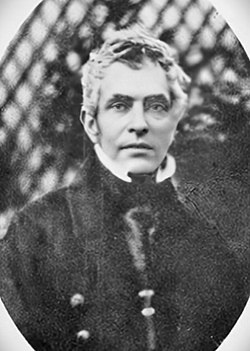
John Nelson Darby (1800–1882)
The most influential leader was John Nelson Darby. Originally an Anglican priest, Darby became disillusioned with the church’s structure and joined the informal gatherings in Dublin.
Darby contributed several key ideas that would shape the Brethren:
- A strong emphasis on the authority of Scripture
- Rejection of a formal clergy class
- The development of dispensational theology
- Expectation of the imminent return of Christ
Darby also traveled widely across Europe and North America, spreading Brethren teaching and influencing evangelical theology globally.
Other Early Figures
Other early leaders included:
- Anthony Norris Groves – A pioneer of “faith missions” who later served in Baghdad and India.
- George Müller – Famous for founding orphanages in Bristol that operated entirely through prayer-supported donations.
- Benjamin Wills Newton – An early leader associated with the assemblies in Plymouth.
Because the movement became particularly prominent in the English port city of Plymouth, outsiders began referring to the group as the Plymouth Brethren.
Core Beliefs
Although Brethren assemblies are independent and not governed by a central authority, several theological and ecclesiastical principles became characteristic of the movement.
1. The Authority of the Bible
Brethren place strong emphasis on the Bible as the ultimate authority in matters of faith and practice. Congregational life is heavily centered on Bible study and exposition.
2. The Priesthood of All Believers
The Brethren rejected the idea of a formal clergy class. Instead, they believed that:
- All believers can participate in worship
- Leadership should arise from spiritual maturity rather than ordination
This often led to open participation in services, where multiple members might speak, pray, or read Scripture.
3. Simplicity in Worship
Traditional Brethren gatherings were marked by:
- Unstructured worship services
- Weekly celebration of the Lord’s Supper
- Minimal liturgy
- No ordained pastor leading the service
4. Expectation of Christ’s Return
Many Brethren adopted premillennial theology, particularly the dispensational framework developed by Darby. This included the belief in a future rapture of the church, which later became widespread in evangelical theology.
The Great Division
The Brethren movement experienced a major split in 1848, creating two main streams.
Open Brethren
These assemblies emphasized greater autonomy and openness in fellowship. They were generally more flexible in their relationships with other Christians.
Exclusive Brethren
Led by Darby and others, this group adopted stricter practices regarding separation from other Christians and churches.
Over time, the Exclusive Brethren themselves divided into numerous smaller groups.
Notable Figures
Beyond the founders, several influential individuals were associated with Brethren assemblies.
George Müller
Müller became famous for his orphanages in Bristol, which cared for thousands of children. His reliance on prayer for financial support inspired many later missionaries and faith-based charities.
C. I. Scofield
Cyrus I. Scofield was heavily influenced by Darby’s teachings. His Scofield Reference Bible helped popularize dispensational theology across evangelical churches in the United States.
Missionary Influence
Brethren missionaries helped establish churches across:
- Africa
- India
- China
- Latin America
Their emphasis on simple church structures made Brethren-style assemblies adaptable to many cultural contexts.
Impact on the Wider Church
Despite their relatively small numbers, the Plymouth Brethren influenced Christianity in several significant ways.
Dispensational Theology
Darby’s dispensational system profoundly shaped modern evangelical eschatology, especially in North America.
The Bible Conference Movement
Brethren leaders helped inspire Bible conferences and prophecy conferences in the late nineteenth century.
Faith Missions
Anthony Norris Groves’ approach to missionary work—depending on prayer rather than guaranteed funding—became a model for later mission agencies.
Lay-Led Churches
The Brethren demonstrated that congregations could function effectively without a professional clergy class. This influenced later house-church movements and non-denominational churches.
Plymouth Brethren Today
Today the Brethren exist in many forms around the world. Some assemblies remain close to their nineteenth-century patterns, while others resemble evangelical congregations with pastors and structured services.
The movement is strongest in:
- The United Kingdom
- North America
- Australia and New Zealand
- Parts of Africa and Latin America
While divisions remain, Brethren assemblies continue to emphasize biblical teaching, simplicity, and active participation by ordinary believers.
Conclusion
The Plymouth Brethren began as a small group of Christians seeking to recover what they believed was the simplicity of the early church. Through the leadership of figures like John Nelson Darby and George Müller, the movement grew into a global network of assemblies and a major influence on evangelical theology.
Although never becoming a large denomination, the Brethren left a lasting mark on modern Christianity—especially in the areas of biblical interpretation, missions, church structure, and expectations about the return of Christ.