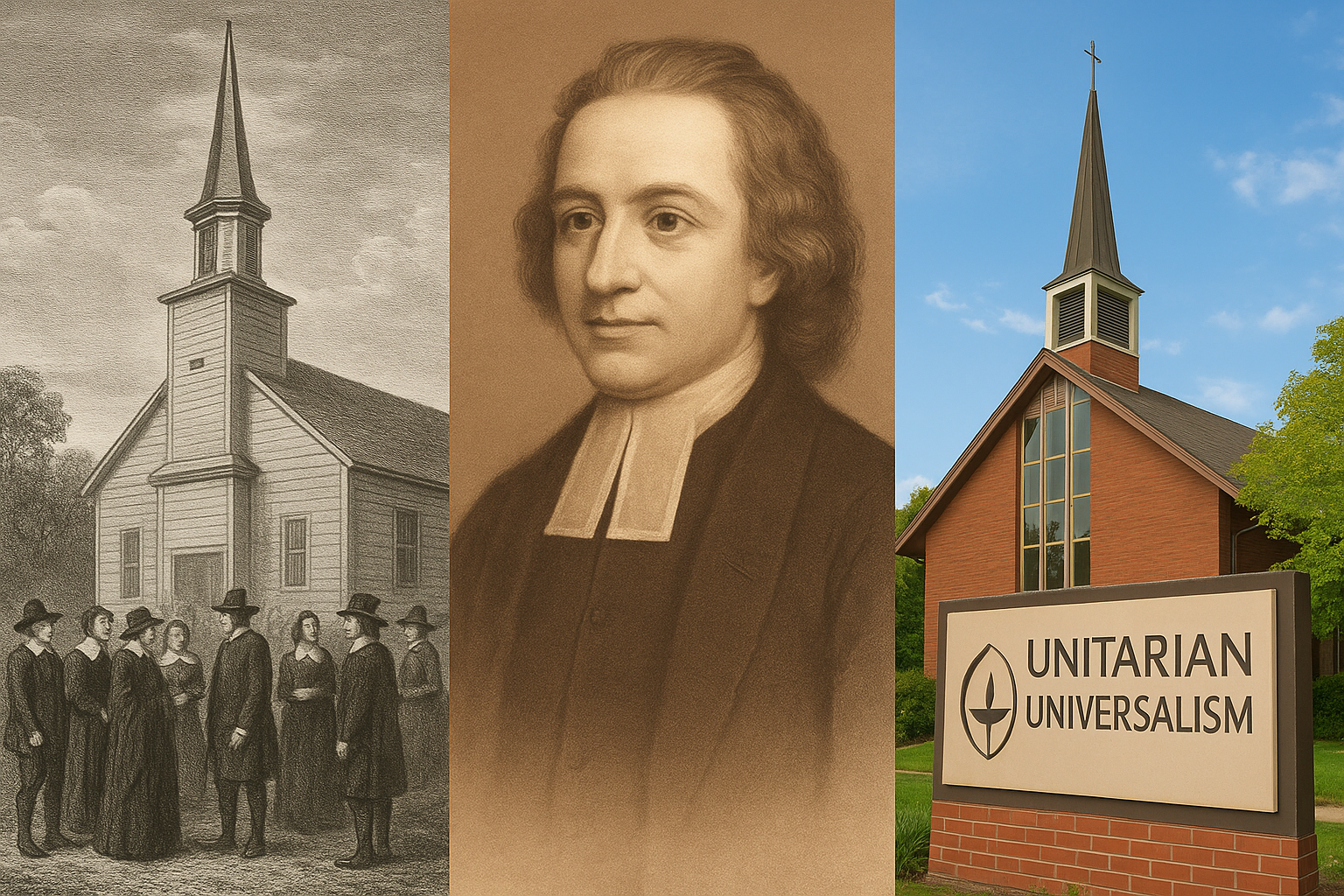
The story of how some Puritans evolved into Unitarians is one of the most fascinating transformations in religious history. What began as a movement seeking to purify the Church of England of Catholic influences eventually gave rise to one of the most liberal and rational forms of Christianity. This journey—from the rigid orthodoxy of Puritanism … Read More “From Puritans to Unitarians: The Evolution of a Radical Faith” »
Month: October 2025
In the early decades of the 19th century, a region in upstate New York became the most spiritually and socially combustible area in the United States. Known as the “Burned-Over District,” this stretch of land witnessed such intense waves of religious revival that it was said there was no more “fuel” (souls) left to burn. … Read More “The Burned-Over District in New York” »
John Wyclif (also spelled Wycliffe or Wiclif) was one of the most influential and controversial figures of the late medieval church. Born around 1328 in Yorkshire, England, Wyclif lived during a time of political turmoil, religious corruption, and intellectual ferment. He is often called “the Morning Star of the Reformation” because his teachings anticipated many of the … Read More “John Wyclif: The Morning Star of the Reformation” »
Among the fascinating writings that emerged in the early centuries of Christianity, The Shepherd of Hermas holds a special place. Though it never became part of the New Testament, it was one of the most widely read and respected Christian works of the second century. It offers valuable insight into how early believers understood sin, repentance, and … Read More “The Shepherd of Hermas: A Window into Early Christian Faith and Practice” »
Few figures in early Christianity have inspired as much admiration — or controversy — as Origen of Alexandria. A towering intellectual of the third century, Origen was both a philosopher and theologian whose writings profoundly shaped Christian thought for centuries to come. Though later generations debated his orthodoxy, his influence on biblical interpretation, theology, and spirituality … Read More “Origen: The Brilliant and Controversial Church Father” »
When the United States declared its independence in 1776, the thirteen colonies were not only politically diverse but also religiously varied. The colonies reflected a patchwork of traditions—some rooted in official state churches and others founded on ideals of religious liberty. Understanding this religious landscape helps us see how the American principle of separation of … Read More “Religion in the Original Thirteen Colonies: Faith at the Birth of the United States” »
The American Civil War (1861–1865) was not only a political and military struggle but also a profound religious crisis. Nearly every major Christian denomination in the United States faced internal conflict over slavery, sectional loyalty, and moral authority. Churches that had once united the North and South found themselves torn apart—reflecting the same divisions that … Read More “How the American Civil War Divided and Transformed Christian Denominations” »
The Anabaptist movement began during the Protestant Reformation of the 16th century as a radical branch that sought to restore what it believed to be the true New Testament church. The name Anabaptist means “rebaptizer,” referring to their rejection of infant baptism and insistence on baptizing only believers who made a personal confession of faith. Their beliefs … Read More “Different Groups Among the Anabaptists” »
