

I would normally review a book on world religions on my Apologetics & Theology Blog. However, I chose to review World Religions: Western Traditions here for some specific reasons.
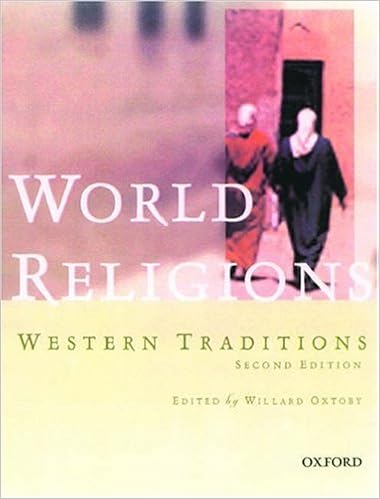
This introduction to world religions is different than most as it has a limited scope. It only covers the western traditions, with a separate volume examining the eastern traditions.
What are western traditions? That can be confusing as all five of the major world religions were founded in Asia. Plus Christianity is thriving in China, while Buddhism does well in North America.
The lines are not clear cut but the editor went with the major spheres of influence. So the majority of this volume covers Judaism, Christianity and Islam. There are shorter chapters, one on Zoroastrianism and one on newer religions.
Because of the limited focus, the chapters on the three major religions are longer than found in most introductions to religion. That gives more room to provide a better overview of the history and beliefs.
Why am I reviewing this here on my history blog?
While this book would be interesting to anyone drawn by the idea of religion, I found it to be a great resource for church history. Not only is the chapter on Christianity well done, the chapters on Judaism and Islam are also relevant.
People often forget that Judaism formed around the same time as Christianity. Yes, the Hebrew Bible is much older than the New Testament but the religion that became Judaism appeared closer to the time of Judaism. In fact it is possible the Hebrew canon wasn’t officially closed until after much of the New Testament was written.
As for Islam, that religion had a huge impact on both the western and eastern church. The eastern church would looks so much different today if Islam had never appeared. Even Europe was shaped by the expansion of Islam. It is interesting to compare the means by which Christianity and Islam spread in their earliest years.
One of the things I liked about this book is that each of the major religion chapters were written by scholars who belong to those traditions. That doesn’t often happen.
I definitely would recommend World Religions: Western Traditions as a helpful resource.