IntroductionThe question of whether Christians could serve in the military was a topic of serious theological, ethical, and practical debate in the first five centuries of the Church. Living under Roman rule, early Christians wrestled with issues like violence, idolatry, and allegiance—often in tension with the demands of military life. While views were not uniform, … Read More “Early Christian Attitudes Toward Military Service (First 500 Years)” »
Category: Church Fathers
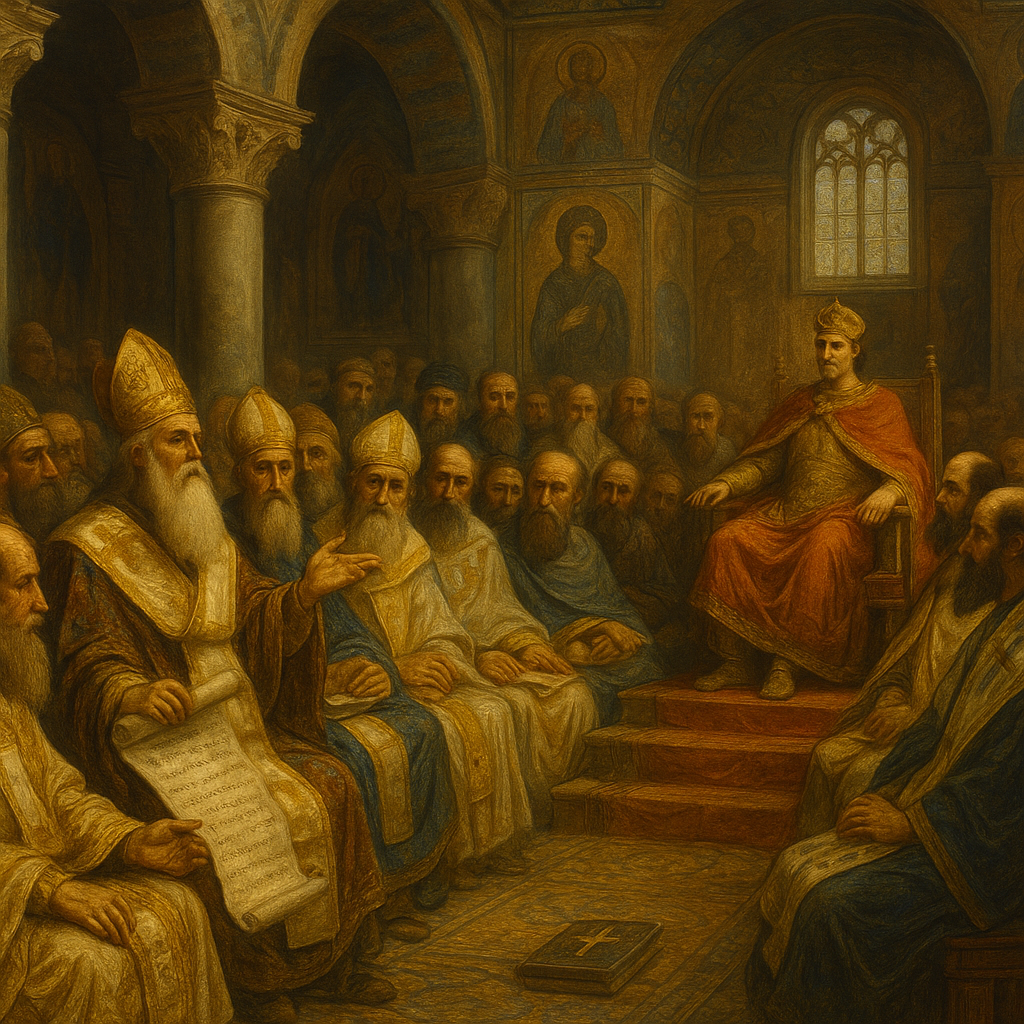
Introduction The Ecumenical Councils of the early Christian Church played a vital role in shaping Christian doctrine and resolving theological disputes. These gatherings brought together bishops and leaders from across the Christian world to seek unity and define orthodoxy. What Are the Ecumenical Councils? Ecumenical Councils are official assemblies of Church leaders convened to discuss … Read More “A Brief History of the Ecumenical Councils” »
The First Council of Nicaea was held in 325 AD. This is probably the most well known of the ecumenical councils and yet there is so much misinformation about it. The two claims that are often made is that Jesus was made God by a vote and that Emperor Constantine chose the books of the … Read More “What Was Decided at the First Council of Nicaea?” »
I have seen numerous churches that are named after St Methodius but knew very little about him. Recently, in my reading of the Church Fathers, I was able to read his surviving works. So who is Methodius? The truth is that we do not have a lot of biographical information about him. This may be … Read More “Who Was Methodius?” »
When we speak of theological schools in the early church, we do not mean anything like modern seminaries or Bible colleges. These were schools of thought. There was teaching going on, but more of a master-disciple relationship. There were five patriarchal sees in the early church and these were Antioch, Alexandria, Constantinople, Jerusalem and Rome. … Read More “Antioch and Alexandria and Their Theological Schools” »
Some Christian traditions observe the season of Lent, the forty days (excluding Sundays) before Easter. Many people are familiar with the idea of giving up something for Lent, but where did this come from? The word Lent comes from the Old English encten, which simply refers to the Spring season. The Latin name for this … Read More “What Are the Origins of Lent?” »
One of the most well known events in the early church was the Council of Nicaea. But it can equally be said that there is no other as misunderstood event as the Council of Nicaea. I get it. It is the first major church council and it is called by the Roman Emperor. The seeming … Read More “What Happened at the Council of Nicaea?” »
One of the most important events in the early church was the First Council of Nicaea. We might think that with such an important council that the Pope would be giving leadership to it. But in fact, the Pope did not attend the council. What we need to remember is that the bishop of Rome … Read More “The Pope During the First Council of Nicaea” »
If there is something that ties together the history of the church from the first to the twenty-first century, it is Christians disagreeing about biblical interpretations. Often times it got quite nasty and not infrequently, resulted in someone’s death. But sometimes it was done right. Dionysius of Alexandria was a bishop during the third century. … Read More “An Example of Healthy Disagreement From the Early Church” »
Many people who are not very familiar with the first four centuries of the church have at least heard of Eusebius. Eusebius literally wrote the book when it comes to the history of the early church. We don’t know a lot about Eusebius but we know some things. Eusebius was born between 260-65 AD, probably … Read More “Who is Eusebius of Caesarea?” »
