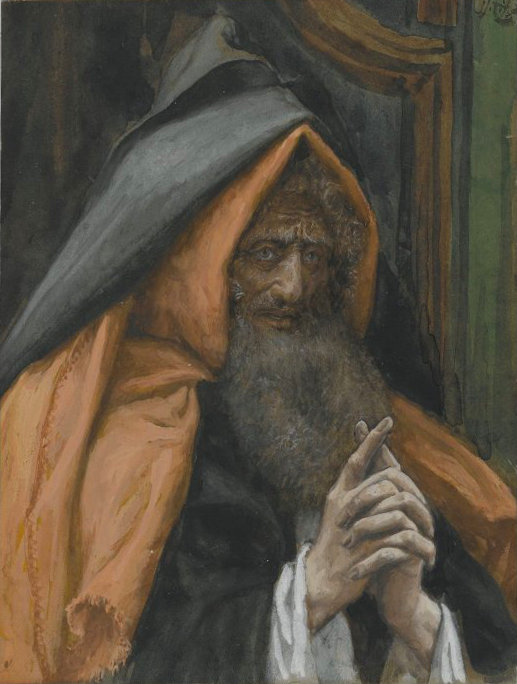

Among the great theologians of the Middle Ages, Anselm of Canterbury (c. 1033–1109) stands as one of the most important figures in Western Christian thought. A monk, philosopher, and archbishop, Anselm helped shape medieval theology through his profound reflections on faith, reason, and the nature of God. His writings continue to influence Christian philosophy, theology, and apologetics today.
Early Life and Monastic Formation
Anselm was born around 1033 in Aosta, located in the Alpine region that today lies in northern Italy. His father was a local nobleman, while his mother was known for her deep piety and religious influence on him.
As a young man, Anselm sought a monastic life but initially faced opposition from his father. Eventually, he left home and traveled north across the Alps. In 1060 he joined the Benedictine monastery at Bec Abbey in Normandy, which was one of the leading intellectual centers of medieval Europe.
At Bec, Anselm studied under Lanfranc, a brilliant scholar and theologian who greatly influenced him. Anselm soon became known for his sharp intellect and spiritual depth. He later succeeded Lanfranc as prior and eventually abbot of the monastery.
Archbishop of Canterbury
In 1093, after the death of Lanfranc, Anselm was appointed Archbishop of Canterbury, the most important church position in England.
The appointment placed him at the center of political and religious tensions between the English monarchy and the church.
During this period, the relationship between kings and bishops was hotly contested, particularly over the issue of who had the authority to appoint church leaders.
Anselm’s Theological Significance
Anselm is often remembered as one of the first great scholastic theologians, a tradition that sought to apply careful reasoning and philosophical analysis to Christian doctrine.
His famous motto was:
“Faith seeking understanding”
(fides quaerens intellectum)
Anselm believed that Christians should not abandon reason but should use it to deepen their understanding of the truths of faith.
The Ontological Argument
In his work Proslogion, Anselm presented what later became known as the ontological argument for the existence of God.
His argument begins with the idea that God is:
“that than which nothing greater can be conceived.”
Anselm reasoned that if the greatest possible being existed only in the mind, then a greater being could be conceived—one that exists in reality. Therefore, he argued, God must exist in reality as well as in the mind.
This argument became one of the most famous philosophical discussions about God’s existence and influenced thinkers for centuries.
The Satisfaction Theory of the Atonement
Anselm also developed a highly influential understanding of Christ’s work in his book Cur Deus Homo (“Why God Became Man”).
In this work he argued that:
- Human sin dishonors God.
- Humanity owes God a debt of justice.
- Humans cannot repay this debt themselves.
- Therefore, God became human in Jesus Christ to restore justice and reconcile humanity to God.
This “satisfaction theory” of atonement strongly shaped later Western Christian theology, including the thought of Thomas Aquinas and the Protestant Reformers.
Conflicts with the Kings of England
Anselm’s time as Archbishop of Canterbury was marked by serious conflicts with the English monarchy, particularly over the Investiture Controversy, a broader European struggle between church and state.
Conflict with King William II
Anselm’s first conflict was with William II of England, also known as William Rufus.
William II attempted to control the English church by:
- Delaying the appointment of bishops
- Claiming authority over church property
- Demanding loyalty from church leaders
Anselm insisted that the church must remain spiritually independent and that the pope—not the king—held ultimate authority in church matters.
The conflict became so severe that Anselm went into exile in 1097, spending several years outside England.
Conflict with King Henry I
After the death of William II, Anselm returned under the new king, Henry I of England.
However, tensions soon re-emerged over the question of lay investiture—whether the king had the right to appoint bishops by giving them the symbols of their office.
This issue was part of the wider European struggle between secular rulers and the papacy, also seen in the conflicts involving Pope Gregory VII and Henry IV, Holy Roman Emperor.
Anselm again went into exile from 1103 to 1106.
Eventually a compromise was reached in which:
- The king gave up the right to invest bishops with spiritual authority.
- Bishops still performed homage to the king for their lands.
This settlement helped define the relationship between church and monarchy in England.
Final Years and Legacy
Anselm returned to England after the settlement with Henry I of England and continued serving as Archbishop of Canterbury until his death in 1109.
His legacy is immense:
- He helped establish scholastic theology.
- He produced one of the most famous philosophical arguments for God’s existence.
- He shaped Western Christian thinking about the atonement.
- He defended the independence of the church from royal control.
Today, Anselm of Canterbury is remembered as one of the greatest thinkers of the medieval church and is honored as a Doctor of the Church in the Catholic tradition.
Conclusion
Anselm’s life combined intellectual brilliance, pastoral leadership, and political courage. His commitment to the idea that faith should seek understanding helped shape the development of Christian philosophy and theology for centuries.
Through his writings and his defense of the church’s independence, Anselm of Canterbury left a legacy that continues to influence both theology and philosophy in the Christian tradition.