Skip to content
History of Christianity

History of Christianity

A Podcast All About Christianity

  • Home
  • Podcast Episodes
  • Recommended Books
  • About Me
  • Privacy Policy
  • Donate
  • Blog
  • Home
  • 2018
  • August
  • 23
  • Prophets and Bible Teachers in New Religions
History of Christianity

Prophets and Bible Teachers in New Religions

Posted on August 23, 2018March 20, 2020 By Stephen Bedard No Comments on Prophets and Bible Teachers in New Religions
New Religions

I just finished teaching a course on Contemporary Religious Movements at Tyndale University College. One of the things that I enjoyed about the course was seeing the connections between the different groups. We focused on groups that developed during the 19th and early 20th centuries.

What was interesting was that there were two basic types of leaders of the sects that developed during this period. I call them the Bible teacher and the prophet. There is some overlap between them, but most leaders fall primarily into one or the other.

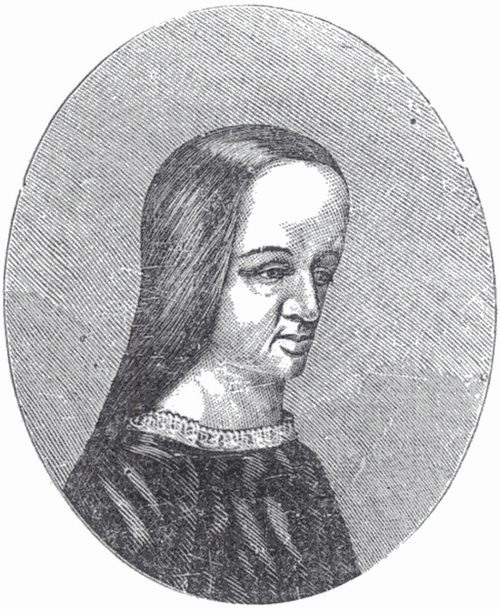
Joseph SmithFor example, Joseph Smith, Jr. was definitely in the prophet category, not that I consider him to have been a real prophet. But the religious group that he created was based primarily on what he considered to be his personal revelations. No one could have sat down with just a Bible and come up with Mormonism. It is based on the ideas of their prophet.

On the other hand, John Thomas of the Christadelphians and Charles Taze Russell of the Jehovah’s Witnesses never claimed to be prophets. They sat down with their Bibles and attempted to discover the truth of Scripture outside of traditional interpretation. Even if we disagree with the teachings of Thomas and Russell, we can at least see where in the Bible they got their ideas. They were Bible teachers, even if orthodox Christians might argue that their interpretations were incorrect. (Check out my book, The Watchtower and the Word)

The Seventh-day Adventists are an interesting example (See my post Are Seventh-Day Adventists Christians?) William Miller, who had predicted that Jesus would come in 1844, was definitely in the Bible teacher category. His interpretation was not based on his own prophecy but on an interpretation of Daniel. Now the explanation by others about why Jesus didn’t return in 1844 was a blend of revelation/interpretation. And Ellen G. White, the founder of Seventh-day Adventism wrote her books in the style of a Bible teacher. But she was seen, during her lifetime, as a prophet by her followers.

Oneness Pentecostals are another interesting example (See my post How Did Oneness Pentecostalism Start?). Their understanding of the proper baptismal formula comparing Matthew and Acts was in the Bible teacher category (taught by Canadian R.E. McAlister). But the development of a Jesus only baptismal formula into a rejection of the Trinity was understood as revelation.

The categories of Bible teacher and prophet are not perfect, but they help us to understand the different types of sectarian leaders of this important time in history.


This post originally appeared here.

Liked it? Take a second to support Stephen Bedard on Patreon!
Become a patron at Patreon!
Tags: 19th Century Cults New Religions Sects

Post navigation

❮ Previous Post: Dutch Revolt and Arminianism
Next Post: The Story of Christianity: Volume 2 – Review ❯

You may also like

History of Christianity
New Religions
Historical Timeline of Religion in the 19th Century
September 14, 2018
Ann Lee
New Religions
The Origins of the Shakers: Visionaries, Celibates, and Radical Communal Christians
May 12, 2026
History of Christianity
New Religions
What is the Difference Between the Latter-day Saints and the Community of Christ?
July 19, 2019
Joseph Smith Jr.
New Religions
The Origins of the Church of Jesus Christ of Latter-day Saints: From Joseph Smith to Brigham Young
June 10, 2026

Leave a Reply Cancel reply

Your email address will not be published. Required fields are marked *

Episode 76 – The Roman Empire in the Fourth Century

Episode 76 – The Roman Empire in the Fourth Century

The fourth century was a century of great change for the church. It was equally so for the Roman Empire. In fact, from this century onward it would be difficult to separate the history of Rome from the history of the church. In this episode, we look at the major events of the fourth century ... Read More "Episode 76 – The Roman Empire in the Fourth Century" »

https://historyofchristianitypodcast.com/podcast-player/1607/episode-76-the-roman-empire-in-the-fourth-century.mp3

Download file | Play in new window | Duration: 00:20:50 | Recorded on July 28, 2026

Recent Episodes

  • Episode 76 – The Roman Empire in the Fourth Century
  • Episode 75 – The Popes of the Fourth Century
  • Episode 74 – The Life of Augustine of Hippo up to 400 AD
  • Episode 73 – Didymus the Blind: Faith, Scripture, and Sight Beyond Sight
  • Episode 72 – Hilary of Poitiers: The Athanasius of the West

Recent Posts

  • The Troubles in Northern Ireland: How Much Was the Conflict Really About Religion?
  • The History of the Vineyard Church: John Wimber, the Third Wave, and the Renewal of Worship
  • The History of the Quakers: From George Fox to a Global Religious Movement
  • The Development and Impact of the Scofield Reference Bible
  • The Role of Women in the First Five Hundred Years of the Church

Popular Posts

  • Martin Luther and John Calvin Martin Luther and John Calvin: Allies, Rivals, and Architects of the Reformation
  • American Flag Was the United States Founded as a Christian Nation?
  • St Francis Major Roman Catholic Orders: Origins, Differences, and Their Role Today
  • Church The Presbyterian Church (USA): Origins, Beliefs, and Distinctives
  • Saint Petersbourg The Role of the Saints in Roman Catholic Theology
  • Pope John XXIII Vatican II: The Council That Changed the Catholic Church
  • Filioque What is the Filioque?
  • Iran Christianity in Persia and Iran: A Long and Complex History
  • Purgatory The Development of the Concept of Purgatory: Origins, Theology, and Evolution
  • Martin Luther The History of the Lutheran Church
Jesus Myth Theory
Disability Comes to Church

Copyright © 2026 History of Christianity.

Theme: Oceanly Green by ScriptsTown